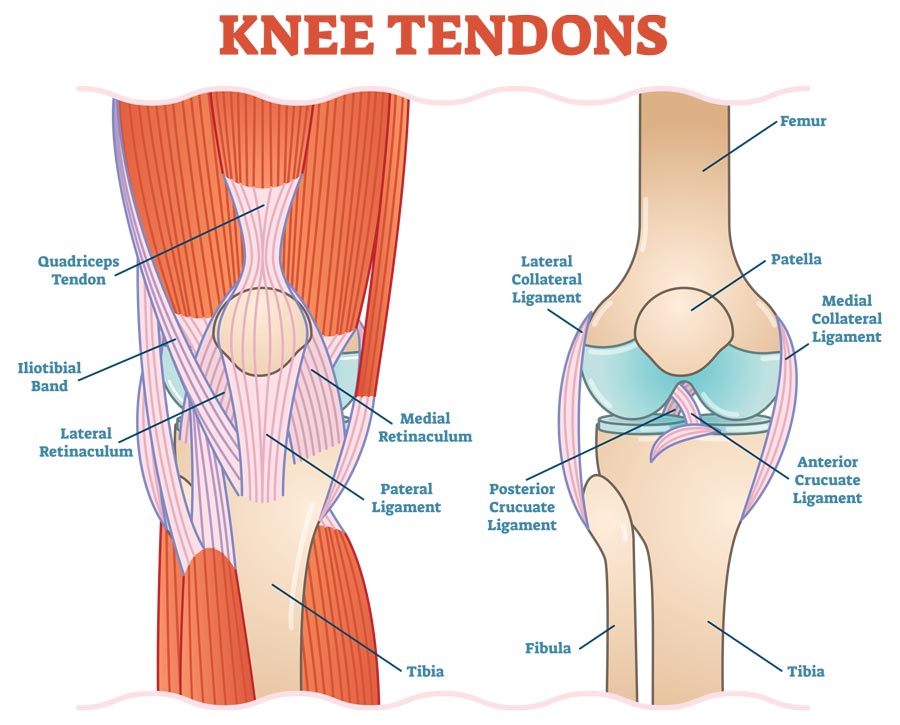
Tendons are the connective tissue that attach muscles to the bones and ensure the movements of joints. Tendon injuries are common clinical problem and occur mainly due to overuse or age-related degeneration. If the injury results in a complete tear of tendon along with some nerve injuries that paralyze the muscles, a tendon transfer is required to restore the lost functions of joints.
What is tendon transfer surgery?
A tendon transfer is a surgical procedure that replaces a damaged tendon with a healthy tendon from another part of your body. Tendon transfers are commonly used to restore the lost functions of tendons especially in hands and foot.
During a tendon transfer surgery, the damaged tendon is detached from its location and is attached back into a different bone or tendon. The relocated tendon will produce a new action depending on its site of insertion. In the whole procedure, the muscle’s origin, its nerve supply and blood supply are kept intact.
Tendon transfer can be used to treat many conditions like radial, ulnar and median nerve injury; foot drop due to peroneal nerve injury; hand paralysis due to spinal cord injury.
What are the indications for tendon transfer surgery?
Tendon transfer surgeries are recommended to restore the functions of tendons that have been lost due to:
- Nerve Injuries: Cuts, pressure, stretching, or crush injuries can injure the nerves in hands and legs.
- Muscle and tendon injuries: Tendon ruptures due to rheumatoid arthritis or fractures.
- Neuromuscular disorders: Loss of muscle functions due to certain nervous system disorders like cerebral palsy, stroke, traumatic brain injuries and spine muscle atrophy.
- Birth Defects: Congenital conditions like hypoplastic thumbs, brachial plexopathy (paralyzed nerves) in which babies are born without certain muscle functions.
In addition to the above conditions, a tendon transfer surgery is also recommended for correction of postural deformity like flat foot, muscle and bone weakness due to some rare diseases like poliomyelitis and leprosy.
Principle of Tendon Transfers
Three important principles of tendon transfer surgery are:
- The transfer should not affect the remaining function of the area.
- The transfer should not create any deformity in function after the repair.
- The transfer should be flexible or capable of adapting to the new site of insertion.
What are the pre-procedure care for tendon transfer surgery?
Your doctor may recommend a tendon transfer surgery after reviewing your medical history and examining the affected area. Before undergoing the procedure, your healthcare team will prepare you for the surgery.
- You will have a pre-operative visit to the hospital where you will undergo regular health checkups and some laboratory tests to evaluate health conditions. Doctor will also enquire about your medical history and on-going medications.
- Doctor may instruct you to temporarily stop certain medications as they may cause some complications in the procedure. Aspirin, ibuprofen, some steroids, diabetic drugs, etc. are temporarily stopped as it may react with the anesthesia or may affect the healing process.
- You will also be instructed to avoid smoking tobacco that contains nicotine and other chemicals. Nicotine will slow down the blood flow to the surgical site and will delay the healing process.
- It is important to keep the affected area and surrounding joints and muscles as strong as possible before the surgery. A session will be scheduled with the physiotherapist where you will be learning some strengthening exercises.
- The healthcare team will instruct you not to eat or drink at least 6-8 hours before the surgery as eating may cause nausea, vomiting, or an upset stomach with anesthesia.
- You may also get instructions to wear loose and comfortable clothes on the day of surgery and to arrange someone to drive you back home after the procedure.
How is tendon transfer surgery performed?
Tendon transfer surgery is performed as an outpatient procedure, which allows the patient to return home on the same day of the procedure. Once you are admitted for the procedure, you will have a discussion with the anesthesia team to decide the type of anesthesia for the surgery. Tendon transfer surgery is usually performed under general anesthesia, but depends on the injury, procedure and patient’s health.
The following steps are performed during a tendon transfer surgery:
- After you are anesthetized, the surgeon will make one or more incisions in the skin to expose the damaged tendon.
- A healthy tendon is identified, cut and rerouted to the damaged site through the soft tissues and bones.
- The healthy tendon is then attached to the torn tendon using sutures and is fixed with a metal or plastic screw.
- Once the procedure is complete, the incisions are carefully closed and covered with surgical dressings.
- Surgeon will immobilize your affected joint with a splint.
What are the post-procedure care?
Total procedure time is usually 1-2 hours. You will be in recovery room till the anesthesia wears off. You will be shifted to ward and will be observed for few hours. The area that has undergone surgery will be kept in an elevated position. You will be prescribed with medications like non-steroidal anti-inflammatory drugs for the short-term pain relief.
Before leaving hospital, you will be given instructions for a speedy recovery. You will be in complete rest (non-weight bearing) for almost six weeks to allow the tendon to heal. Your splint will remain for 2-3 weeks. Once the splint is removed, a cast or surgical boot will be placed for two months. After the transferred tendon has healed, your physiotherapist may recommend exercises to strengthen the muscle. It is important to follow the instructions of your therapist as too little or too much movement can both create problems.
The repaired tendon usually regains its full strength after about 12 weeks, but it may take up to 6 months to regain the full range of movement.
Outlook
Tendon transfer is a surgical procedure which aims to restore movement, strength and function by transferring a healthy tendon from another area of the body to replace a damaged or diseased tendon. This type of surgery is generally effective if you adhere to the rehabilitation program. In some cases, complications develop after surgery, such as infection or the repaired tendon snapping or sticking to nearby tissue which may require further treatments.
The outcome of the surgery is often better when the injury is a clean cut to the tendon, rather than one that involves multiple fractures or damaged bones and joints.
Sources
- Tendon transfer surgery. https://handcare.assh.org/Anatomy/Details-Page/ArticleID/39433/Tendon-Transfer-Surgery. Accessed on: 13-02-2020.
- Hand tendon repair.https://www.nhs.uk/conditions/hand-tendon-repair/recovery/. Accessed on: 13-02-2020.
- Tendon transfer surgery.https://www.massgeneral.org/orthopaedics/hand/conditions-and-treatments/tendon-transfer-surgery. Accessed on: 13-02-2020.
- Tendon transfer. http://www.thieme.com/media/samples/pubid1030458428.pdf. Accessed on: 13-02-2020.
- Tendon transfer. http://nerve.wustl.edu/nd_tendon_brachial.php. Accessed on: 13-02-2020.