The knee joint is the primary weight-bearing joint in our body. Knee is cushioned by two cartilaginous discs called meniscus which acts as a shock absorber during weight bearing activities. As the meniscus is soft in nature, they are highly vulnerable to tear, which creates pain, swelling and locking in the knee joint. A sudden knee twist during any activity (traumatic tear) or as a result of repetitive loading stress over time (degenerative tear) can result in the meniscal tear.
Meniscus tear is a common sport-related injury among athletic individuals. But sometimes a deep squatting or lifting something heavy can also cause a meniscal tear.
Depending on the severity of your injury, treatment options can vary from at-home remedies to surgical methods.
What is meniscectomy?
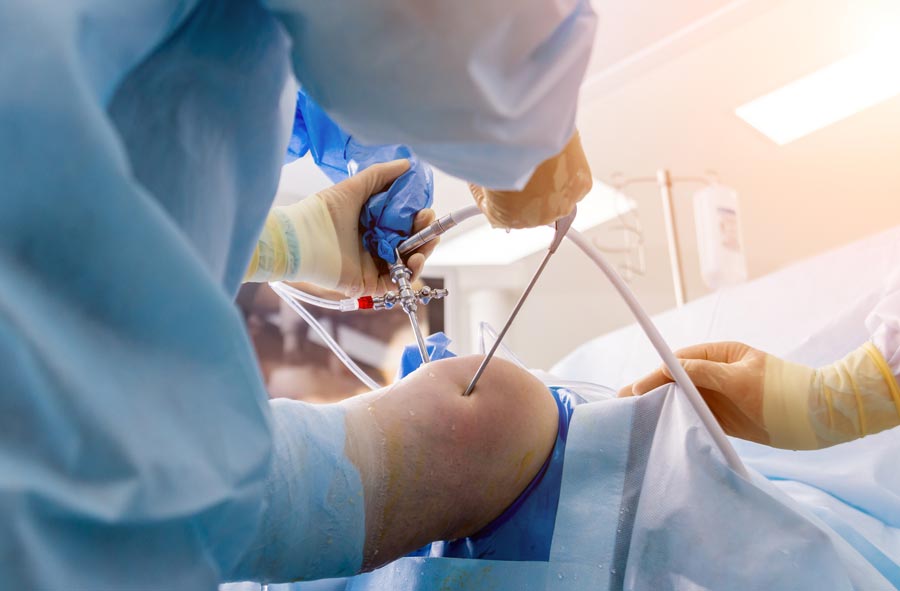
Meniscectomy is the surgical removal of a torn meniscus. There are 2 methods of meniscectomy - arthroscopy and arthrotomy. Arthrotomy is an open technique and is rarely used while, arthroscopy is a common procedure which is performed using a scope with a mounted tiny camera and with specialized instruments. The incisions made are small compared with the traditional open surgeries which will heal faster.
A total meniscectomy refers to surgical removal of the entire meniscus. While partial meniscectomy refers to removal of only the damaged part.
When is meniscectomy recommended?
A decision to remove all or parts of meniscus is considered when the tear is severe i.e. knee is persistently swollen and “locked" or when the non-surgical methods fail to alleviate the associated pain and dysfunction. The other factors that determine the need of surgery are:
- Extent of tear and patient’s age: Surgical removal of torn meniscus is recommended only when the tear is more than 5mm and in elderly people with degenerative changes in the knee.
- Location of tear: The meniscus tear that occurs in the periphery of the meniscus requires a surgical removal, while the inner meniscus tear is easier to repair because of the presence of more blood vessels in that area.
- Cause of tear: A meniscus tear that occurs as the result of a sudden injury tends to have clear edges which can be repaired by non-surgical method, while the tear resulting from wear and tear over time will be thin and ragged, hence surgical approach is needed.
What are the pre-procedure care for meniscectomy?
Two or three weeks before the procedure, your doctor may suggest some strengthening exercises to make the surrounding muscles stronger. The stronger your muscles around your knee, the faster will be the recovery.
Doctor will perform a physical examination to check for infections, scars or any scratches around the knee area. He/she will also enquire about your medical history and may ask to stop some medications that cause complications during the surgery. E.g. Aspirin will elevate the chance of bleeding.
On the day of surgery, you will be asked to fast for 8 to 12 hours before the procedure. You may be asked you to arrange comfortable and lose clothes to wear after the procedure and have someone to drive you back home.
As the surgical procedure is carried out under anesthesia, a member of the anesthesia team will talk to you before the surgery to finalize the choice of anesthesia.
- Local anesthesia numbs only a small, specific area of the body. Its effect lasts for a short period of time and is often used for minor outpatient procedures.
- Regional anesthesia will numb a larger area of the body like below the waist and is generally used to make a person more comfortable during and after the surgical procedure.
- General anesthesia will make the person completely unconscious during the operation with no memory of the surgery.
How is arthroscopic meniscectomy performed?
The patient is shifted to the operation room and the procedure begins soon after the administration of the anesthesia. The procedure is as follows.
- Surgeon will make small incisions around the knee area.
- Through one of the incisions, the camera (arthroscope) is inserted which will give a clear internal image of the joint on a monitor.
- Once the tear is found, surgeon will examine the extent of injury and based on which either a small piece (partial meniscectomy) or the entire (total meniscectomy) meniscus is removed.
- The surgical instruments for the procedure are then inserted through the other incisions.
- After the procedure, surgeon will examine the rest of the knee to make sure it is healthy.
- The tools and scope are removed, and the incisions are closed with a suture or surgical tape strips.
What is the post-procedure care?
The surgery can be performed on an outpatient basis where you can leave the hospital the same day after the procedure. After surgery, you’ll be in the recovery room for an hour or two. As the sedation wears off, you may experience pain and swelling over the knee area. Swelling and pain can be managed by practicing R.I.C.E therapy; applying ice packs, keeping your legs elevated, wearing compression bands and giving maximum rest. Medication for short-term pain relief to prevent infection and blood clots are usually prescribed.
Some exercises may be recommended which may help in regaining the strength and mobility. You may start with simple thigh muscle exercises the day after surgery and increase it accordingly as per the instruction of your therapist.
Patients are generally able to get back to their normal activities in three to four days after arthroscopic meniscus repair. These activities will initially be performed by wearing a brace.
Outlook
Meniscectomy involves the surgical removal of the torn part of a meniscus. It is an effective procedure for restoring the comfort and normal functions of the knee. The procedure may leave you less active for about a month or more, but you can return to your normal daily activities in six weeks after the surgery. The recovery time varies from person to person. The knee can function normally for decades after the surgery. A partial meniscectomy has a better long-term outcome compared to total meniscectomy as there are chances that part of the knee may become arthritic in 10-15 years after undergoing a total meniscectomy.
Sources
- Arthroscopic Meniscus Repair.https://orthop.washington.edu/patient-care/articles/sports/arthroscopic-meniscus-repair.html. Accessed on: 05-03-2020.
- Meniscectomy for a Meniscus Tear. https://www.uofmhealth.org/health-library/uh2055. Accessed on: 05-03-2020.
- https://www.winchesterhospital.org/health-library/article?id=14843. Accessed on: 05-03-2020.
- Meniscus Tears. https://orthoinfo.aaos.org/en/diseases--conditions/meniscus-tears/. Accessed on: 05-03-2020.
- Knee Arthroscopic Surgery for Meniscus Tears. https://www.dukehealth.org/blog/knee-arthroscopic-surgery-meniscus-tears. Accessed on: 05-03-2020.