Knee replacement surgeries involve replacing the damaged bone with an artificial one (prosthesis) to relieve the pain and restore the knee functions. Although most of the knee replacement surgeries are successful, it may fail for reasons like high-impact activities, overweight, etc. These may result in break or wear out of the prosthetic causing pain, stiffness or instability and difficulty to perform everyday activities.
When the knee replacement fails, a second surgery may be recommended, which is called knee joint revision surgery.
What is knee joint revision surgery?
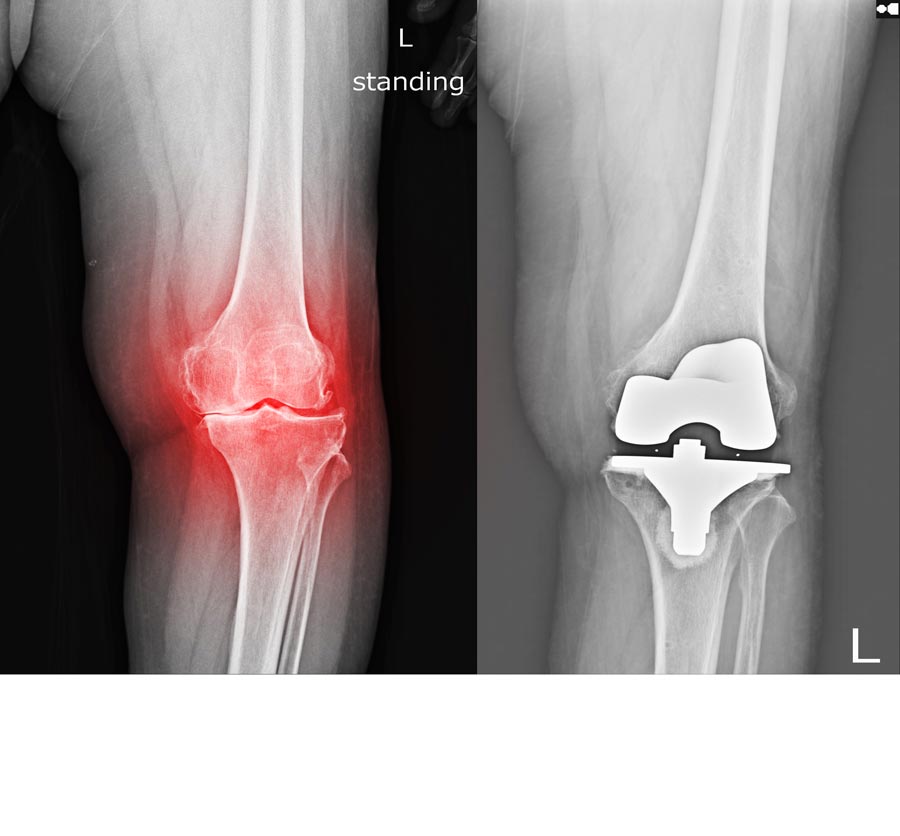
Knee joint revision is a procedure in which the surgeon removes the previously implanted artificial knee joint that is no longer functioning properly and replaces it with a new implant. The procedure is also known as revision total knee arthroplasty where it also uses bone grafts.
Indications:
The major reason for having a knee replacement revision surgery is knee pain that persists even after surgical treatment. The main problems that may trigger the need for revision surgery are:
- Loosening of the implant: For proper functioning of the bones and joint after the surgery, the implant must remain firmly attached to the bone. However, when the implant loosens, it may cause severe knee pain.
- Infection of the implant: Artificial joints can often become infected after surgery, which causes pain and stiffness in the joint.
- Instability of the knee: When the ligaments around the knee become damaged or improperly balanced, it may result in instability of the knee joint. This will alter the knee function, cause pain and hence require revision surgery.
- Fractures: Periprosthetic fractures (fractures around the knee implants) which affect the fixation and stability of the implant will require a revision surgery.
- Osteolysis (bone loss): This is the condition characterized by the progressive destruction of the bone tissue. It is a common complication associated with replacement surgeries where the body attempts to clear the wear particles on the surface of artificial joints by autoimmune reactions. These autoimmune reactions will lead to the resorption of healthy bone tissues.
What are the pre-procedure care for knee joint revision surgery?
As the knee joint revision surgeries are complex and have high rates of post-surgery complications, it is important that the revision procedures are done by experienced and skilled surgeons. Before undergoing the surgery, the healthcare team will prepare you to ensure a successful procedure, fast and smooth recovery. The pre-procedure steps include:
- Your surgeon will ask you to undergo a complete physical examination including blood tests to evaluate other health conditions. He/she will also ask you about the medications being taken, prior surgeries, and history of complications (if any) with anesthesia.
- The surgeon will advise to stop or temporarily discontinue certain medications such as corticosteroids, blood thinners, insulin, etc. as they may cause some complications during the procedure.
- Your surgeon will order imaging tests like X-ray, CT scan or MRI scan to learn more about the conditions of knee.
- You will be advised not to undergo any dental procedure at least six months before the surgery. There are chances of bacteria to enter blood stream during the dental procedures, which may cause complications in the knee revision surgery.
- You should arrange someone to drive you back home after the procedure and assist you at home during the recovery period.
How is knee joint revision surgery performed?
On the day of surgery, you will be admitted to the hospital. Your anesthesiologist will review your primary medical history and other parameters. You will be given hospital gown to wear before the surgery and then will be shifted to the operation room.
The surgical procedure will begin soon after the patient has been anesthetized. The procedure is as follows:
- The surgeon will make a deep incision through the joint capsule.
- Surgeon will analyze the components of the old knee prosthesis and will remove the damaged parts.
- After removing the previous implant parts, the surgeon will prepare the bone surfaces for the revision implant.
- Bone grafting will be required for rebuilding the knee joint if there is any significant bone loss. Bone grafts may be either autograft (bone taken from another site of patient’s body) or an allograft (bone tissue from donor or cadaver).
- The specialized revision implant is then carefully placed in the right position and is fixed well.
- The knee joint is then washed out with sterile saline fluid and the layers of the incision are closed.
- A temporary drain may be placed in your knee to collect any fluid or blood that may remain after the procedure.
- The motion of the joint is then carefully examined.
What are the post-procedure cares after knee joint revision surgery?
After surgery, you will be moved to the recovery room, where your recovery from anesthesia is monitored. Once you wake up, you will be moved to a hospital room. The recovery period involves the combination of physical therapy and medication as instructed.
Medications are often prescribed for short-term pain relief after surgery. Doctor may prescribe one or more medications to prevent blood clots and decrease leg swelling. Antibiotics to prevent infections after surgery may also be prescribed.
Your orthopedic surgeon will refer you to a physical therapist who will teach specific exercises to strengthen your leg and restore range of motion. In most cases, you will begin walking and resume other daily activities as soon as possible after surgery.
Before going back home, you will be given assistive devices, such as a walker or crutches for the first few days or until you are comfortable enough to walk without assistance. You will be asked to continue moving and exercising your knee at home as per the instructions of your physiotherapist.
It is important to keep the stitches or staples of the wound clean and dry to avoid any infections.
Outlook
Knee joint revision surgery is a highly successful operation for patients where the previous knee implant is damaged. Though the knee joint revision surgery is complex, the long-term outcome of the revision surgery includes relief from pain and increased stability and function. More than 90% of patients who undergo revision procedures can expect to have good to excellent results[3]. Though the surgery is successful, complications like bleeding, intra-operative fractures, blood clots etc. can occur, which you must know before making the decision to undergo the surgery.
Sources
- Revision Total Knee Replacement. https://orthoinfo.aaos.org/en/treatment/revision-total-knee-replacement/. Accessed on: 23-03-2020.
- Knee revision surgery. https://www.surgeryencyclopedia.com/Fi-La/Knee-Revision-Surgery.html. Accessed on: 23-03-2020.
- Revision Total Knee Replacement: Frequently Asked Questions (FAQs). https://www.hss.edu/conditions_revision-total-knee-replacement-faqs.asp. Accessed on: 23-03-2020.