Have you ever woken up with a stiff and painful neck? And later in the day, turning your head leads to sudden onset of pain with restricted neck movement? These may be the signs of a condition known as torticollis or wry neck.
What is torticollis?
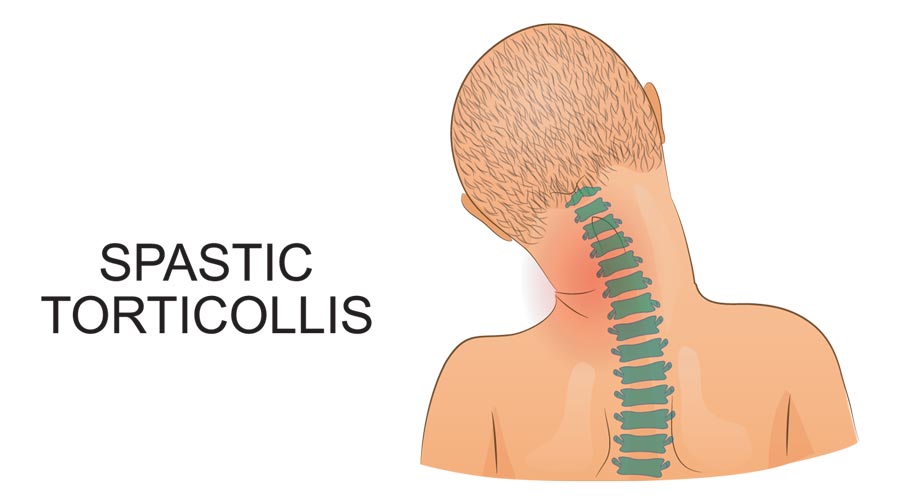
Torticollis or wry neck is a condition where the neck muscles twist beyond their usual capacity causing the head to rotate at an odd angle. This will lead to neck pain and stiffness, which is often accompanied by spasm of the surrounding neck muscles. The condition will restrict the normal range of motions of the neck. This condition can be congenital (present at birth) or acquired and is commonly seen in neonates.
There are mainly two types of torticollis:
- Temporary torticollis: This type occurs when the lymph nodes surrounding the neck are inflamed after cold, infection or some injury that affects the joint between the neck bones. Temporary torticollis is associated with mild pain and can be treated by giving proper rest.
- Fixed torticollis: Fixed torticollis is also called acute torticollis or permanent torticollis. It can develop from any underlying problem in the muscles or bone structure or a tumor growth in the spinal cord. Fixed torticollis usually affects the muscles and bones of face and neck, causing an unbalanced look or flattened face appearance.
What are the symptoms of torticollis?
Symptoms of wry neck can begin slowly and may worsen over time. However, each person may experience different symptoms, including:
- Difficulty in moving the head
- Pain on one side of your neck
- Spasm of the neck muscles
- An unwillingness to turn or bend their head and neck to the opposite side
- Back pain and headache
- Awkward chin positions
What are the causes and risk factors of torticollis?
Though there are several factors that result in torticollis, the exact cause of the condition is not known.
Congenital torticollis is more likely to happen if the baby’s head was in the wrong position inside the uterus. Acquired torticollis may be caused by irritation from a viral infection, injury, or any vigorous movement.
Additional causes may include:
- Awkward sleeping position
- Poor posture at the workstation
- Neck injuries
- Neurological problem called dystonia
- Trauma to the neck or spine
- Heavy lifting
- Abuse of drugs like ketamine, cocaine, amphetamine, which causes sudden onset of involuntary contractions of the muscles of the face, neck, or back
The major risk factors of torticollis include:
- Family history of the disorder
- Congenital abnormalities of the cervical spine
- Trauma
- Klippel-Feil syndrome (a congenital condition characterized by the fusion of spinal bones in the neck)
- Cervical dystonia causes neck muscles to contract in spasms while twisting the head to one side.
How is torticollis diagnosed?
As the symptoms of torticollis may resemble other conditions and medical problems, your healthcare provider will record your medical history and conduct a physical exam to check the important signs and symptoms of the condition. The doctor may request imaging studies like X-ray, CT scan, MRI and EMG for detailed diagnosis:
- X-ray images of the neck help to check whether the problem is due to a bone fracture or dislocation.
- A CT scan will help to diagnose whether the condition is caused by any hard-to-spot abnormality or other conditions like degenerative arthritis, etc.
- An electromyogram (EMG) measures electrical activity in the muscles to determine which muscles are affected.
What are the treatment options for torticollis?
Treatment for torticollis aims to relax the contracted neck muscles involved. Specific treatment for torticollis depends on various factors like age, medical history, severity, etc. Both non-surgical and surgical treatment options are available for torticollis.
The non-surgical treatment options recommended for torticollis are:
- Applying heat or ice pack to the cervical spine followed by a massage to relax the stiffened muscles.
- Stretching exercises may help muscle spasms.
- Wearing compression bands or neck braces may prevent the swelling and pain.
- Pain killers (non-steroidal anti-inflammatory drugs) like ibuprofen, diclofenac; muscle relaxing drugs like baclofen, diazepam; paracetamol in strong doses.
- Injecting botulinum toxin can temporarily relieve torticollis. These injections are usually needed every three months.
- Usually, torticollis in babies (3-6 months) can be corrected through position changes and stretching exercise.
Surgical method is recommended for those with severe cases and who have torticollis by birth. The surgery will mostly take place once the child reaches preschool age. In children, surgeons may cut certain nerves and muscles to stop contraction or to lengthen some muscles in the neck.
In some cases, brain stimulation is recommended, where the doctor will insert a wire to the part of brain that controls movement and disrupts the brain signals. This treatment may help with cervical dystonia.
Can torticollis be prevented?
There is no known way to prevent this condition. Early torticollis treatment along with some lifestyle changes may prevent the condition from getting worse. Some lifestyle changes that will help prevent torticollis include:
- Improve your posture by gentle stretching exercises.
- Arrange your workstation so that you are comfortable, use footrest if needed.
- Give proper support to your neck while sleeping with a support pillow and avoid using multiple pillows.
- While driving, support your neck by adjusting the headrest and don’t turn the head rapidly.
- Manage your stress by exercising regularly and performing breathing exercises.
Sources
- https://www.healthdirect.gov.au/torticollis. Accessed on: 26-02-2020.
- Torticollis (Wryneck). https://www.hopkinsmedicine.org/health/conditions-and-diseases/torticollis-wryneck. Accessed on: 26-02-2020.
- https://www.nicklauschildrens.org/conditions/torticollis. Accessed on: 26-02-2020.
- https://patient.info/bones-joints-muscles/neck-pain/torticollis-twisted-neck. Accessed on: 26-02-2020.
- Infant torticollis. kidshealth.org/en/parents/torticollis.html. Accessed on:26-02-2020.