Bone cancer is developed when healthy cells in the bone grow out of control, forming a mass of abnormal tissues called a tumor. A bone tumor can be malignant (cancer cells spread throughout the body) or benign (cancer cells don't spread to other areas of your body). Tumor in the bone will destroy the healthy tissues and weaken it, making the bone more susceptible to fractures. Though the treatment options vary from non-surgical treatments to surgical methods depending on the type of tumor, surgery is often considered as the treatment for bone cancer.
What is bone tumor surgery?
Bone tumor surgeries are those surgical procedures where the cancerous cells are removed and are replaced with artificial grafts. In some cases, amputation is also necessary. Unlike other normal cells, the cancer cells can continue to grow and develop a tumor, if any cancer cells are left behind after a procedure. Hence, tumor surgeries aim for the complete removal of cancer cells. To ensure this, tumor surgeries use a technique called wide excision where the tumor cells are removed along with some surrounding normal tissues.
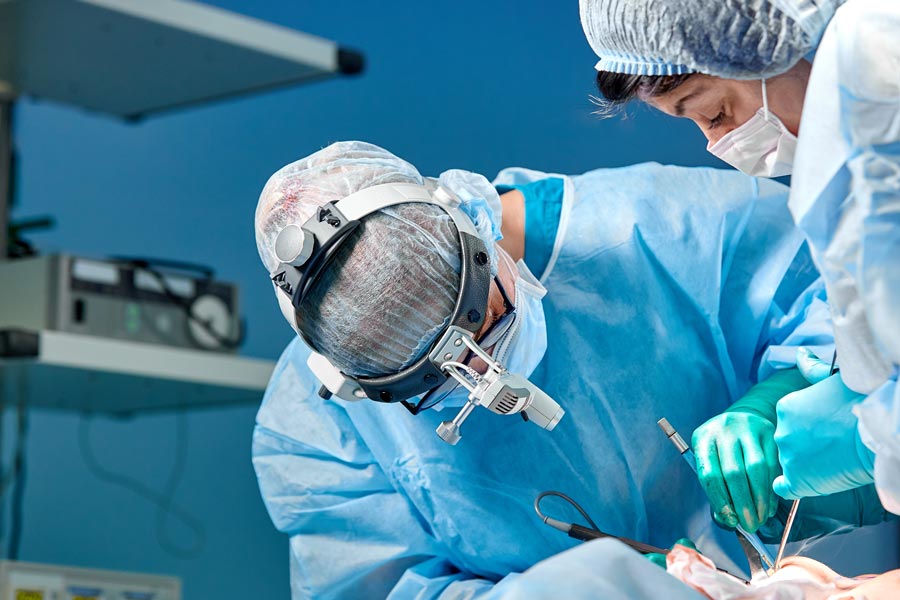
Each tumor surgery differs by the technique used for the tumor removal. The important techniques that are used in the bone tumor surgeries are:
- Curettage involves scooping of tumor out of the bone leaving a hole in it and the hole is filled using bone cements.
- Cryosurgery involves freezing the tumor cells to subzero temperatures using liquid nitrogen to destroy the residual microscopic tumor cells.
- Resection is the removal of large section of the affected bone tissue without disturbing the neighboring tissues.
- Amputation refers to the surgical removal of the entire extremity without replacing it.
What are the types of bone tumor surgeries?
The bone tumor surgeries are of different types. The type of surgery depends on the location of tumor; its type; its grade; its size and its ability to come back after it is removed.
- Tumor surgeries based on the location of tumor: The bone tumor surgeries vary based on the location of tumor, some of the surgeries are discussed below:
- Tumors in the arms and legs:
If the tumor is in an arm or leg, the surgeries performed are limb-salvage (mostly preferred) and amputation. Both methods require a reconstruction surgery where artificial implants like metal plates or bone grafts are used to replace the missing bone and provide strength to the leftover bone.
Limb-salvage surgery: This surgery aims to remove all the cancer cells without damaging the nearby tissues, nerves and blood vessels. It is a complex surgery and most-often requires a bone graft (bone from other part of your body or from a donor) to replace the bone that's lost. It is also known as limb-sparing surgery as the tumors of leg or arm can be removed without harming their limb.
Amputation: It is the surgical removal of a part or the entire limb for the complete removal of tumor cells. Amputation surgery is recommended when the tumor is large, has spread into the tissues surrounding the bone and involves nerves or blood vessels. This procedure also requires reconstruction surgery where a prosthetic is placed to aid the function of the removed limb. - Tumors in other areas:
Apart from arms and legs, bone tumors are also found in pelvis, lower jaw bone and spine or skull.
Tumors in the pelvis are treated with wide excision surgery to ensure that all the cancer cells are removed. The procedure is followed by reconstruction surgery.
Tumors in the lower jaw are treated by the surgical removal of the entire lower half of the jaw and prosthesis are placed.
Tumors in the spine and skull require a complex surgical procedure as wide excision surgery is not possible to perform in those areas. Combination of curettage, cryosurgery and radiation is used for the removal of tumors in spine and skull.
- Tumors in the arms and legs:
- Tumor surgeries based on the type of cancer:
The bone tumor surgeries can also be differentiated based on the type of cancer i.e, benign and malignant tumors.
The benign tumors which are non-cancerous are usually treated with non-surgical methods; in some cases, surgeon may recommend surgical techniques. They are treated with less aggressive surgical methods like wide-excision surgery as benign tumors have less chance of recurring after being treated.
The malignant or metastatic tumors are usually treated with aggressive surgical methods like limb-salvage and amputation as there are chances of distant spread of bone cancer even after treatment. The cancer that develops by the metastasis of primary cancer are known as secondary cancer. Surgery to remove secondary cancer is called a metastasectomy. Lungs are the common site for the spread of bone cancers. Complete removal of lung metastases is usually recommended for such conditions. These procedures are very complex with poor surgical outcomes.
Rehabilitation after tumor surgeries:
Rehabilitation is an important part after any tumor surgery. Rehabilitation aims to help each patient to return to their normal daily activities. The tumor treatments cause physical and psychological side effects and it is important to consider all these factors during the recovery period. A team of healthcare professionals will be guiding you during the recovery period. The team may include:
- Physiotherapists: They will help the patient to regain their fitness after the surgery. They will teach some exercises that will help to keep the muscles strong and flexible to restore its normal movements.
- Occupational therapists: They will help in facilitating and enabling the patient to resume their daily routine by reducing the effects of disabilities caused by the surgery or psychological dysfunction. They aim to bring a positive outlook on patients after the surgical procedures.
- Psychologists: They will help to cope with the various psychological problems experienced by cancer patients, such as anxiety and stress. Psychologists will have counseling sessions with the patients where they will guide to cope up with emotions.
- Surgeons: They will help in the overall management after the surgery; they will guide the patient to understand what to expect after the procedure. Frequent hospital visits after the surgery are required, where surgeon will examine the surgical site and evaluate health conditions and ensure that the prosthesis is fitted properly in the exact position.
Outlook
Tumor surgeries aim for the complete removal of the cancerous tissues in the body. The surgical methods differ for each patient depending upon the severity, type and location of the tumors. Rehabilitation is important after tumor surgeries. Recovery time differs for each person and will depend on the type of treatment, patient’s age, overall health and many other factors. It's important to go for all the follow-up appointments for successful outcomes after the surgery. The artificial implants are designed for a longer run. One may require revision surgeries if there is any infection or any wear and tear of the prosthetic.
Sources
- Surgery for Bone Cancer. https://www.cancer.org/cancer/bone-cancer/treating/surgery.html. Accessed on: 27-03-2020.
- Types of surgery. https://www.cancerresearchuk.org/about-cancer/bone-cancer/treatment/surgery/types. Accessed on: 27-03-2020.
- Bone tumors.http://www.tumorsurgery.org/tumor-education/bone-tumors/general-information.aspx. Accessed on: 27-03-2020.
- Rehabilitation after bone cancer treatment. https://www.cancer.ca/en/cancer-information/cancer-type/bone/supportive-care/rehabilitation/?region=on. Accessed on: 27-03-2020.