Frozen shoulder or adhesive capsulitis is a condition which limits the range of motion of the shoulder. It causes considerable amount of pain in shoulder which progressively increases over time.
The condition takes about 1 to 3 years to completely resolve.
Overview of Frozen Shoulder
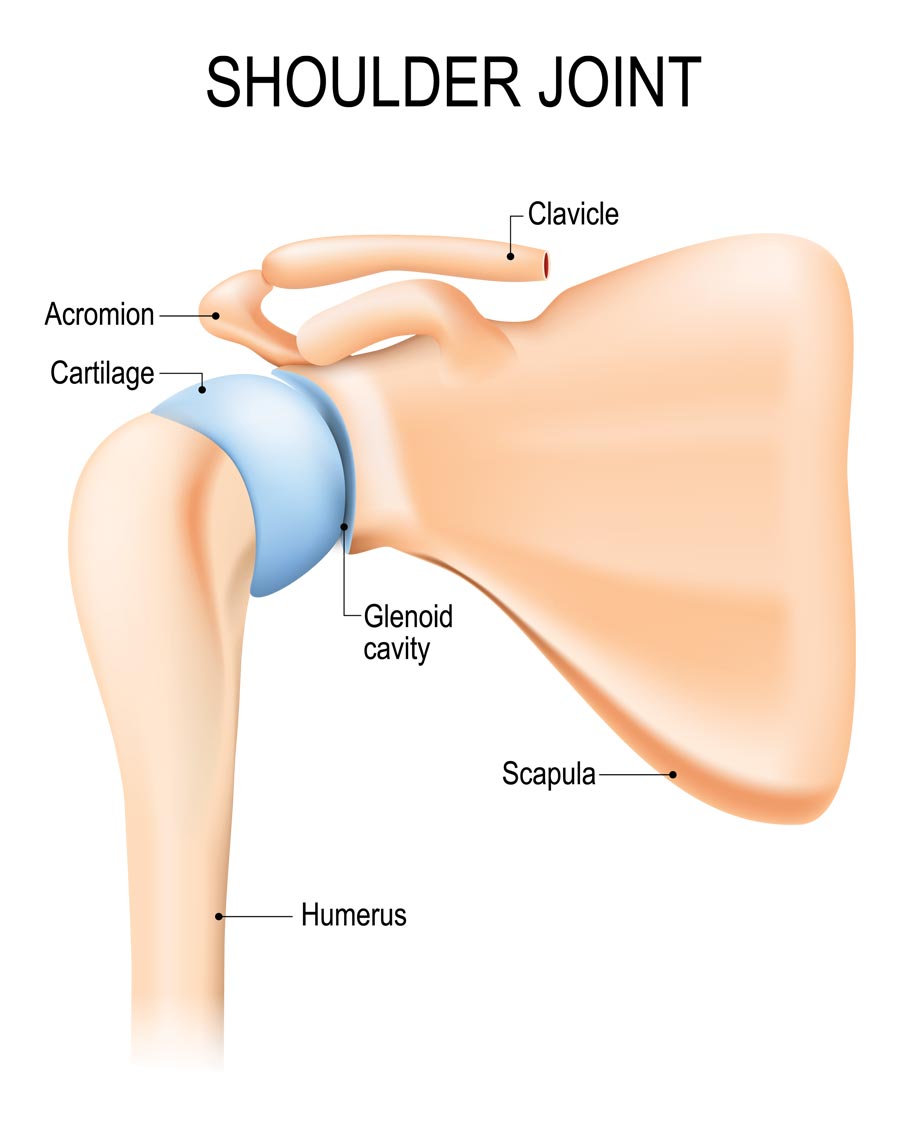
There are three bones in the shoulder, namely the humerus (upper arm), scapula (shoulder blade) and clavicle (collarbone).These bones along with the ligaments and tendons that make up the shoulder joint, are encased in a capsule of connective tissue. In frozen shoulder, this capsule becomes hardened and thick, making movement difficult. The synovial fluid that lubricates this joint becomes less in quantity. The development of bands of scar tissue also aggravates this condition.
Causes of Frozen Shoulder
There is no clear evidence to prove who is more prone to getting this condition. However, there are certain risk factors associated with this condition:
- Sex: Women are more likely to suffer from this than men.
- Age: It is usually seen among the age group of 40 to 60 years.
- Health issues: About 10% to 20% people who are diabetic, also suffer from frozen shoulder. People who are recovering from a medical condition like stroke or who have had a surgery like mastectomy which restricts arm movement, are more likely to develop frozen shoulder.Certain other medical conditions like thyroid, heart disease or Parkinson’s disease, can greatly increase your chances of developing a frozen shoulder.
Symptoms of Frozen Shoulder
This condition is marked by pain and stiffness of the shoulder joint, making movement very hard. The pain may be located on one shoulder or in the shoulder muscles of the upper arm. The pain may aggravate at nights, making it very difficult to sleep.
Frozen shoulder progresses in 3 phases. Each phase is marked by its own unique symptoms.
Freezing Stage
- Development of severe pain in the shoulder on movement
- Worsening of the pain, especially at nights
- Limited movement of the shoulder for anywhere between 6 to 9 months
Frozen Stage
- Relief in pain but gradual worsening in stiffness
- Marked effort in moving the shoulder, limiting daily activities
- Duration of this stage is 4-12 months
Thawing Stage
- Movement starts getting back to normal
- Duration of this stage is from 6 months to 2 years
Diagnosis of Frozen Shoulder
The diagnosis of frozen shoulder requires a thorough physical examination and few diagnostic tests.
Physical examination: Your doctor would check the range of motion of your shoulder joint and how badly it hurts during these movement. The doctor would ask you to move your shoulder on your own(active movements) and follow it up by moving the shoulder for you(passive movements). This may require injecting an anesthetic in your shoulder so that movement can be made possible.
Diagnostic tests: Although a physical examination is generally enough to diagnose a frozen shoulder, your doctor may call for some diagnostic tests. An X-ray, MRI or ultrasound may be performed to see if the pain and stiffness is due to problems like arthritis or a torn rotator cuff.
Treatment Plan
Non-steroidal anti-inflammatory drugs (NSAIDs) that are easily available over-the-counter may be prescribed by the doctor to relieve pain. Apart from medications, your doctor would ask you to perform stretching and strengthening exercises to improve your range of motion. Some other treatment options may be looked into if the condition prolongs. These are given below:
Physical therapy: This is more advantageous during certain phases of the frozen shoulder. It includes exercises to increase the range of motion of the shoulder joint.
Joint distension: The shoulder capsule is stretched by means of injecting sterile water. The shoulder can be easily moved by doing so.
Injection: Corticosteroid injections may be administered in the shoulder joint to lessen the pain and increase its mobility.
Surgery: An operation is less likely to be performed in order to treat a frozen shoulder. It is only done if other measures haven’t helped. The surgery involves an arthroscopic procedure, where light-weight and pencil-sized tools are inserted via small cuts in the shoulder.
Shoulder manipulation: Under general anesthesia, the doctor the forcefully moves the shoulder. This helps to loosen the shoulder tissue. This method is not very popular as it can lead to complications like fractures. It is now replaced by the modern arthroscopic surgery.