Back pain, especially in the lower back is a common problem in people as they grow older. Our spine consists of vertebrae that are stacked together to form a tunnel called the spinal canal. A tubular nervous tissue passes through this canal known as the spinal cord.
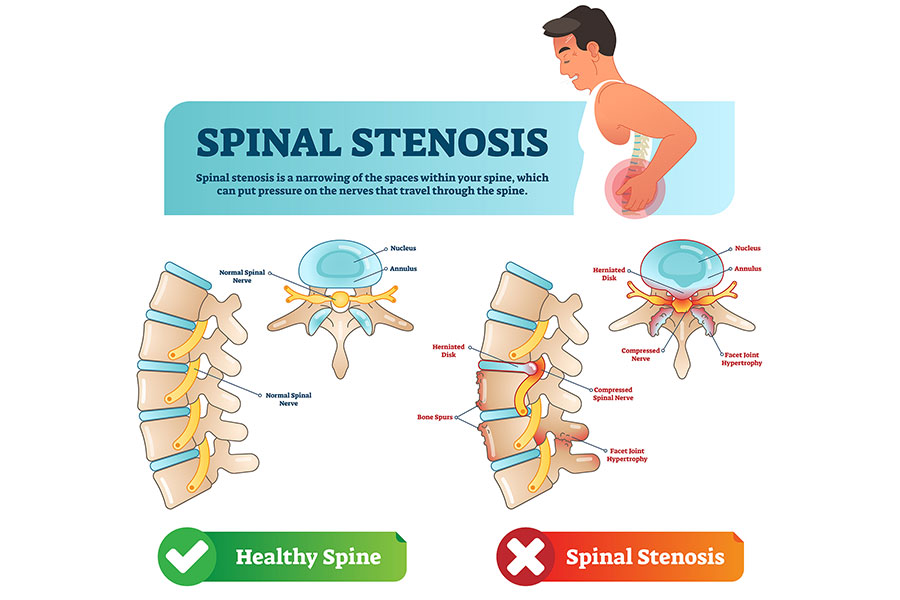
A part of the spine consisting of five vertebrae at your lower back (between the ribs and pelvis) is known as the lumbar spine. Narrowing of spinal canal in this region leading to compression of spinal nerves travelling through your lower back into legs is known as the lumbar spinal stenosis. It may happen at any age, however, in the majority of cases, it happens due to age-related degenerative conditions.
What are the symptoms of lumbar spinal stenosis?
The symptoms of lumbar spine stenosis include:
- Back pain
- Burning pain in the buttocks or legs
- Numbness or tingling in the legs, calves, buttocks or foot
- Cramping in the calves while standing for long periods or walking
- Weakness in the leg or foot
- Pain that may improve when you bend forward, sit or lie down
- Loss of function in legs and bowel or bladder dysfunction
- Loss of sexual ability
What are the causes of lumbar spinal stenosis?
The common cause of lumbar spinal stenosis is arthritis. It usually happens gradually after prolonged degeneration of the bones.
- Drying of the discs as we age leads to loss of water content, resulting in a reduction of disc height. This is known as settling or collapse that may in turn reduces the tunnel space.
- Inflammation of the ligaments around the joints may lead to space limitation for the nerves present in the tunnel.
- The weakening of the discs also leads to bulging or hardening of the discs in the spinal canal limiting the tunnel space.
- Degeneration of the cartilage leads to the formation of bone spurs (overgrowth) that may grow into the tunnel space, thereby narrowing it.
- Displacement of the discs may also narrow the spinal canal.
- Some people born with back problems are at higher risk of developing lumbar spinal stenosis, known as congenital spinal stenosis.
How is the lumbar spinal stenosis diagnosed?
The diagnosis usually involves reviewing the medical history and doing a physical examination. Details related to when that condition has started and the situations during which the symptoms become more severe are considered. The physician may press the area to find if it hurts. He may also ask you to bend in different directions to identify any limitations in the extent of motion or development of pain.
The physician may also recommend some other tests to confirm the diagnosis. They include:
X-rays: They provide details about the bones structure, alignment of the spine and details about the joints. They may help to identify changes related to age, such as loss of disc height or development of bone spurs.
Magnetic resonance imaging (MRI): MRI provides detailed images of the soft structures of the spine such as discs, muscles, nerves and spinal cord. It also helps in the identification of enlargements, degeneration and the presence of tumors that may lead to nerve compression.
Computed tomography (CT): It helps in identifying changes in the shape and size of the spinal canal. It also helps in studying the structures in and around the spinal canal along with the bone anatomy.
Myelogram: A specialized technique involves injecting a dye into the spine followed by imaging that helps to identify weather the nerves are being compressed in the spinal canal.
What is the treatment line for lumbar spinal stenosis?
The treatment for lumbar spinal stenosis involves strengthening the muscles and preserving the motion of the spine. The treatment for lumbar spinal stenosis includes the following options.
Conservative treatment: It includes physical therapy that involves stretching and muscle strengthening exercises including your back, stomach and legs. Consulting a physical therapist may help you in planning the exercise regimen and also knowing the kind of activities that are to be avoided. You may also be recommended to wear a brace to support your back for certain period.
Medication: Medications, such as acetaminophen, aspirin, and opiates are recommended to relieve pain and swelling. Depending on the severity of the condition, steroid injections may also be recommended.
Surgery: Surgery is only considered when the above treatment options fail to provide relief. It aims to relieve the pressure on the spinal cord and to restore the alignment of the spine. This is achieved by removing the damaged portions or bone spurs causing pressure and widening the space between the vertebrae. Sometimes the lower back may also be stabilized by fusing the vertebrae with the help of screws or bone implants.
How can we prevent lumbar spinal stenosis?
As degeneration happens as a normal process along with ageing, preventing the condition may not be always possible. However, one can improve their spine health and lower the risk of lumbar spinal stenosis by regular exercise, maintaining good posture and healthy weight.
References
- https://www.aans.org/en/Patients/Neurosurgical-Conditions-and-Treatments/Lumbar-Spinal-Stenosis
- https://orthoinfo.aaos.org/en/diseases--conditions/lumbar-spinal-stenosis/
- https://www.hopkinsmedicine.org/health/conditions-and-diseases/lumbar-spinal-stenosis
- https://www.health.harvard.edu/newsletter_article/Treating_lumbar_spinal_stenosis