Some may experience a dull aching pain or a grinding sensation when walking downstairs or flexing the knee. It is a common complaint among women and sports persons.This condition is termed as anterior knee pain or chondromalacia patellae. It can be caused by any structural damage to the muscles, ligaments or cartilages in the knee.
What is chondromalacia patellae?
Anterior knee pain or chondromalacia patellae is a condition that develops due to softening of the cartilage beneath the kneecap (patella) causing the knee cap to rub against the thighbone (femur) while moving the knee and causing pain. The pain and stiffness over knee will make it difficult to climb stairs, kneel down, and perform other everyday activities. Sometimes, this condition is referred to as patellofemoral pain.
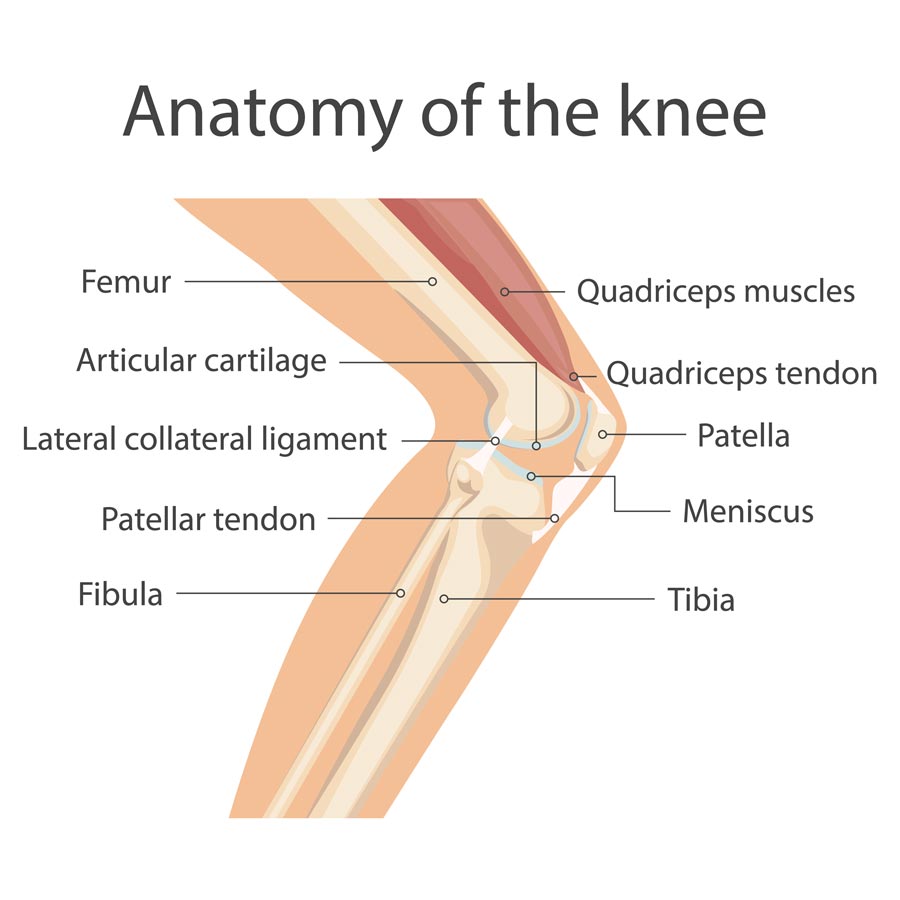
What are the symptoms of chondromalacia patellae?
A dull, aching pain that begins gradually in the front of the knee is the characteristic symptom of chondromalacia patellae. Other symptoms are:
- Popping or crackling sounds in your knee when climbing stairs or when standing up after prolonged sitting.
- Tenderness around the kneecap area.
- Pain during exercise and activities that repeatedly bend the knee.
- Grating or grinding feeling when the knee is flexed.
What are the causes and risk factors of chondromalacia patellae?
The condition is caused by vigorous and continuous physical activities that cause repeated stress on the knee. Any structural damage or some issues in the muscles, bones and cartilage of the knee may cause softening of the cartilage beneath the kneecap, which in turn restricts the kneecap movements.
This may occur when:
- The kneecap is in an abnormal position or in poor alignment.
- There is tightness or weakness of the front and back muscles of your thigh.
- You do too much activity that causes extra stress on the kneecap (such as running, jumping, skiing, or playing soccer).
- The groove in the thighbone (where the kneecap rests) is too shallow.
- You have conditions like arthritis or flat foot.
The risk of getting anterior knee pain or chondromalacia patellae are more in people who:
- Are overweight
- Have suffered previous dislocation, fracture, or other injuries to the kneecap
- Actively participate in sports like running, jumping, cycling, etc.
- Are teenagers and healthy young adults, usually girls as their wider pelvis applies more pressure to knee.
How chondromalacia patellae is diagnosed?
Diagnosing the condition correctly is the first step to solve knee pain. Doctor will take complete medical history and perform a physical examination to help determine the cause of the pain. Physical examination involves bending the knees and checking stability, mobility, etc. Doctor may also use imaging techniques like X-rays and MRI scan (in rare case) to rule out any damage to the structure of the knee and to confirm the diagnosis.
What are the treatment options available for chondromalacia patellae?
Depending on the cause of your pain, treatment procedures vary. In general, resting the knee temporarily and avoiding activities that cause knee pain along with some non-steroidal anti-inflammatory medications (NSAIDs) can help to relieve pain. As obesity is an associated risk factor, losing weight will help to reduce pressure on your knee. The common treatment options are:
- Non-surgical treatment
- Surgical treatment
Non-surgical treatment methods include:
- R.I.C.E therapy:
- Rest: Restricting the activities that stress the knee joint and resting properly will reduce the pain.
- Ice: Applying ice packs reduces swelling.
- Compression: Using compression bands will support the knee.
- Elevation: Keeping your legs in an elevated position will reduce swelling.
- Physiotherapy:
Some exercises will help you regain full range of motion, strength, power, endurance and coordination of hip movements and joint. It will focus to emphasize stretching the lower extremities. - Orthotics:
It is a treatment method where special shoe inserts will help to relieve pain, stabilize your foot and ankle and there by taking stress off your lower leg.
Surgical treatment methods are rarely needed; they are performed in patients who do not respond to nonsurgical treatment. The surgical options are:
- Arthroscopy
This is a surgical method where the surgeon will remove the damaged articular cartilage. A thin tube fitted with a video camera known as arthroscope is inserted through a small hole which allows the surgeon to see the structures of the knee and damage present. - Realignment
In this procedure, a large incision is made to open the knee structure. The kneecap is movedback to its anatomical position using a technique known as a lateral release, or the lower most attachment may be moved to regain normal alignment.
What are the preventive measures for chondromalacia patellae?
To protect your knee from future damages, one can take preventive measures, such as:
- Wear shoes appropriate to your activities as it will reduce stress on your knees.
- Warm up with stretching exercises before doing any physical activity.
- Increase the duration and intensity of the training sessions gradually.
- Practice stretching exercises to strengthen muscles in the front thigh.
- Reduce or avoid activities that hurt your knees.
- Prefer cycling or swimming instead of running.
- Maintain a healthy body weight as obesity may stress your knees.
Source:
- Patellofemoral Pain Syndrome. https://orthoinfo.aaos.org/en/diseases--conditions/patellofemoral-pain-syndrome/. Accessed on 19-02-2020.
- What is Anterior Knee Pain and How is It Treated?.https://www.fishertitus.org/health/anterior-knee-pain. Accessed on: 19-02-2020.
- Anterior knee pain. https://medlineplus.gov/ency/article/000452.htm. Accessed on: 19-02-2020.