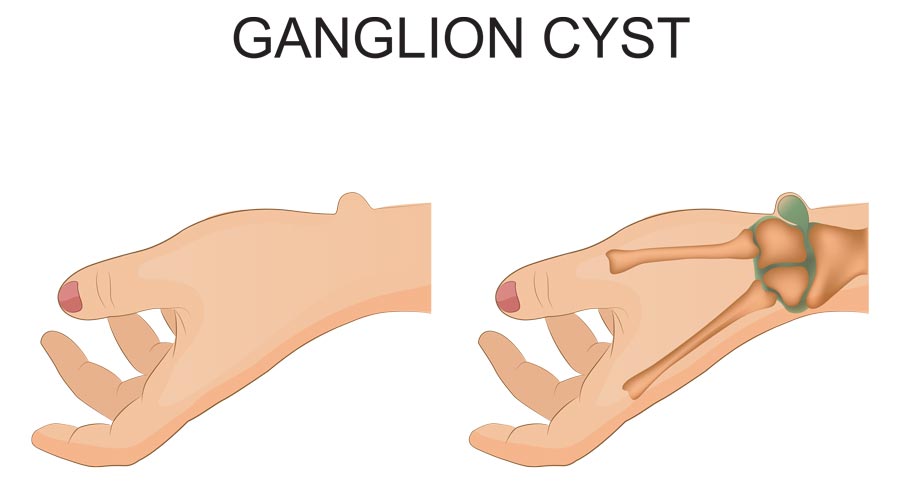
Soft tissue cysts are non-cancerous soft tissue masses that develop in tendons or in the tissues surrounding your joints. They are common and can occur anywhere in the body. However, the common sites include tendons of the hands, wrists, ankles and knees.
The causes for the cyst are unknown, but they are likely to develop due to repeated trauma in the affected area or joint. Conditions like osteoarthritis also found to be associated with development of the cysts, as people with the condition are often found to have cysts in the joints of the hands or behind the knees, when they are affected.
They occur in varying sizes and majority of them may not produce any symptoms, such cysts do not require any treatment and they go away on their own. However, some types of cysts may require surgical removal when their existence is concerning. They may press the nearby nerve causing pain, muscle weakness or interfere with joint movement, when they do occur in joints. In some cases they may recur even after surgery.
Evaluation
The soft tissue cyst needs to be thoroughly evaluated for accurate diagnosis. It includes an integrated process of physical examination and imaging studies along with patient history. If the diagnosis is still unclear, biopsy may be recommended to evaluate whether the cyst is cancerous or non-cancerous. It involves in obtaining a small sample of the tissue with the help of fine needle or syringe and evaluating the cells under a microscope. A thorough evaluation of the type of cyst helps in better management.
Indications for excision
Treatment for cysts depends on the type, location and the symptoms. Treatment is not necessary unless they cause deliberating symptoms. Usually they are best managed through conservative treatments like icing. Excision of the cyst is considered when
- It is causing pain.
- There is a cosmetic concern.
- It grows and hinders joint movement.
- It presses on a nerve, vein, arteries or other vital organs.
How to prepare for the surgery?
- Inform your physician about your current medications and allergies.
- Your doctor may recommend you to stop taking medicines like aspirin, as they may increase your risk for bleeding during or after the procedure.
- Avoid smoking at least six to eight weeks before surgery as it may cause breathing problems and delay recovery.
- Follow the instructions about taking the prescribed medicine on the day of the procedure.
- Follow the instructions regarding eating and drinking before the procedure.
During the procedure
- The procedure is performed under general or local anesthesia depending on the location of the cyst.
- A small incision is made on the skin.
- The cyst is located and removed along with its root (a part of cyst connecting to the tendon).
- The incision is sutured and bandage is placed on the affected area.
- Surgical removal of the cyst often results in scar, the size of which depends on size of cyst and several other factors.
Post-surgical care
- You may need to stay in the hospital for at least a night after the surgery, which may extend depending on the invasiveness of the procedure.
- Follow the activity restrictions suggested by the doctor.
- Tubes may be inserted at the excision site to drain fluid that may build up around the wound.
- Pain medications and antibiotics are recommended to prevent infection.
- You may be advised to rest the treated part and keep it elevated as much as possible to avoid swelling.
- You may have to revisit the hospital after one or two weeks, to get the stitches removed.
- Depending on the location of the surgery, you may be recommended to start physical therapy to enhance recovery process.
What are the complications of the procedure?
The possible risks that are similar to any other surgery and specific to excision of the cysts may include:
- Anesthesia
- Infection
- Bleeding
- Damage of the nearby nerves or blood vessels
What is the prognosis of the procedure?
Surgical removal of cysts usually does not have any complications or side effects. Pain and other symptoms reduce considerably during the initial period after excision. The chance for recurrence is less with removal of cysts compared to other treatments.
References:
- https://www.betterhealth.vic.gov.au/health/conditionsandtreatments/cysts-ganglion-cysts
- https://www.mayoclinic.org/diseases-conditions/ganglion-cyst/diagnosis-treatment/drc-20351160
- https://limbpreservation.org/tumor/extremity-tumors/benign-tumors-of-the-extremities/benign-soft-tissue-tumors/soft-tissue-cysts.html