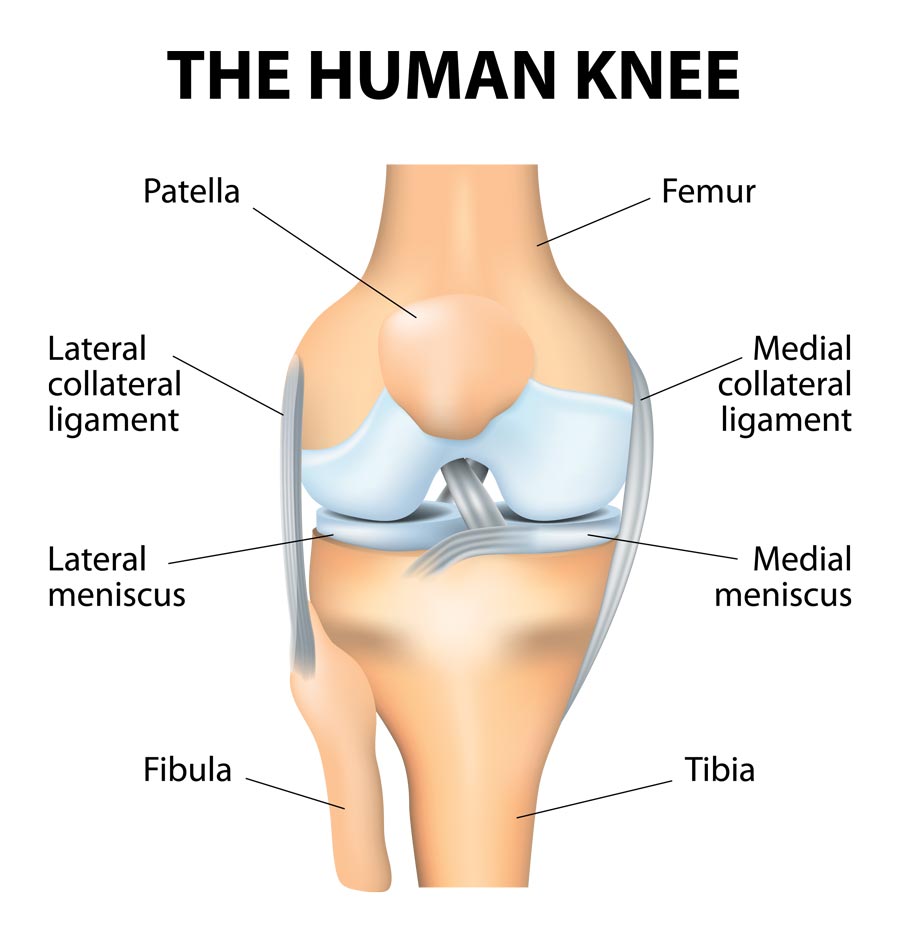
Ligaments are strong connective tissues that attach muscles to the bones. The medial collateral ligament (MCL) is the connective tissue that runs along the inner edge of the knee. It connects the bones in the thigh (femur) and lower leg. It allows the knee to rotate, stabilize and prevent the leg from extending too far inward. A direct blow or hit to the knee can either stretch or tear the medial collateral ligament of the knee and thereby affecting the normal movements of the knee bones.
What is a medial collateral ligament (MCL) injury?
Any sprain or tear to the medial collateral ligament is known as MCL injury. Activities that involve bending, twisting, or a quick change of direction can injure the medial collateral ligament of the knee. This injury is common among sportspersons.
The MCL injury is graded as I, II or III depending on the severity of the tear.
Grade I: This is a mild MCL sprain, where the ligament is stretched but not torn. One may experience weakness or instability of the knee joint. Grade 1 injury may not cause swelling in the knees.
Grade II: Here the ligament is partially torn and considered as moderate sprain. One with grade II injury may experience instability of knee joint, significant pain and swelling.
Grade III: This is the most severe MCL injury where the ligament will be completely torn. One will experience knee instability, significant swelling and bruising in the knee joint. The pain ranges from moderate to severe.
What are the symptoms of a medial collateral ligament (MCL) injury?
If the medial collateral ligament has been damaged or torn, then one will usually have:
- “Pop” sound in the knee soon after the injury
- Pain that may range from mild to severe
- Stiffness
- Swelling
- Tenderness along the inside of the knee
- Instability of knee joint.
What are the causes and associated risk factors of medial collateral ligament (MCL) injury?
In most cases, the MCL injury happens during athletic activity or from a forceful hit from the side. A sudden change in direction or forceful twists of knees while running and the jumps or lands that twist the knee joint are the major causes for MCL injuries.
The risk of MCL injury is more for football or soccer players as they are exposed to injuries during the match and practice sessions. Those associated with skiing and other sports which involve stop-and-go movements, jumping, or weaving are also at a risk of MCL injury.
How can you diagnose medial collateral ligament (MCL) injury?
MCL injury can be diagnosed by a detailed physical examination of your knee. Doctor will examine the range of knee movement, swelling around the knee joint and tenderness of the joint. Doctor will also ask about the cause of injury and the symptoms you experience immediately after the injury.
To confirm the diagnosis, imaging tests like X-rays or MRI scan of the knee joint will be recommended.
How is a medial collateral ligament injury treated?
The treatment method depends on the severity of the medial collateral ligament injury. Soon after the injury, some initial treatment methods (non- surgical) can be followed, which include:
- Use over-the-counter pain medicine (non-steroidal anti-inflammatory drugs) such as acetaminophen or ibuprofen.
- Follow R. I. C. E protocol to control the pain and swelling, which involves Rest, Ice, Compression (using an elastic bandage), and Elevation (raising the knee).
- Wear braces over the knee to protect medial collateral ligament and the knee joint while healing.
Once the pain and swelling have gone, one should start exercising as per the instructions of the physiotherapist to restore strength and normal range of motion of the knee.
For mild and moderate injury, the medial collateral injury will usually respond well to non-surgical treatment. Surgery may be required when the ligament tear is severe and is not responding to the non-surgical methods.
Before the surgical proceedings, it is important to examine the extent of your injury and any associated injuries. Surgeon will make an incision on the knee through which the ends of the injured ligaments are reattached or reconnected using large stitches, a metal screw or a bone staple. If the tear is located in the middle of the ligament, then the torn ends are sewed together.
The duration of recovery will differ depending on the severity. A minor, or grade 1, MCL tear can take a few days to a week, grade 2 tear may take two to four weeks to heal and grade 3 tear usually takes four to eight weeks to heal sufficiently, so that you can return to normal activities, including sports.
Are there ways to help prevent another Medial collateral ligament injury?
Having an MCL tear will increase the risk for getting another one. To lower the risk of another MCL tear or other injuries, work with a physical therapist or trainer to:
- Improve strength, balance, and flexibility of knee joints and muscles
- Train with proper techniques for jumping, landing, and changing direction during sports.
Sources
- Medial Collateral Ligament Tears. https://www.cedars-sinai.org/health-library/diseases-and-conditions/m/medial-collateral-ligament-tears.html. Accessed on: 22-02-2020.
- Medial Collateral Ligament (MCL) Injuries. https://kidshealth.org/en/teens/mcl-injuries.html. Accessed on: 22-02-2020.
- Medial Collateral Ligament (MCL) Injury. https://www.uofmhealth.org/health-library/abn2411. Accessed on: 22-02-2020.
- MCL Tear Treatments. https://www.ucsfhealth.org/conditions/mcl-tear/treatment. Accessed on: 22-02-2020.