Knee is the largest and most complex joint in our body and is made up of bones, cartilages, and connective tissues - tendons and ligaments. The knee joint allows various movements like stretching, flexing and minimal amount of rotations. As the knee is the weight bearing joint and is not as stable as the hip or the ankle, this joint is injured more often that the other joints in the body. The common symptom of a knee injury is frequent knee pain with a popping sound. The treatment of knee injuries depends on the type and severity of the injury, and may include non-surgical and surgical methods.
Surgical treatment is recommended when the injury is severe or when the symptoms don't get better with non-surgical methods. One of the preferred surgical treatment methods is knee arthroscopy.
What is knee arthroscopy?
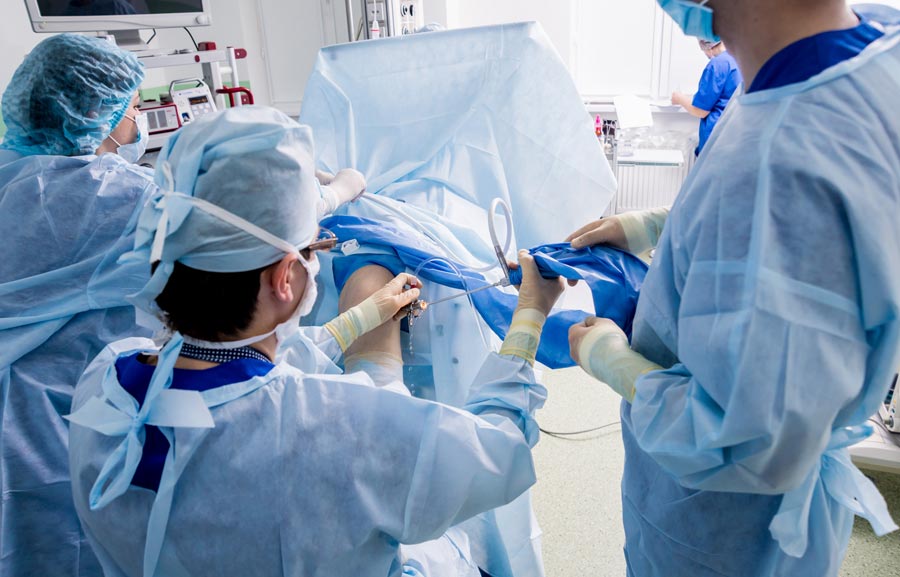
Knee arthroscopy is a surgical procedure used to visualize, diagnose, and treat various problems inside the knee joint. The instruments for the procedure are inserted through the small incisions made on the knee joint. The surgery is conducted with the aid of a tube called arthroscope which is a narrow tube with a tiny camera mounted at one end; it gives a clear image of the entire joint and helps to conduct the procedure effectively.
When is knee arthroscopy recommended?
Not all causes of knee pain can be effectively treated with an arthroscopic procedure. The procedure may relieve the symptoms and pain associated with some problems that damage the cartilage surfaces and soft tissues around the knee joint. Some reasons for undergoing arthroscopic knee surgery include:
- Repair or removal of torn meniscus
- Reconstruction of the anterior cruciate or posterior cruciate ligaments after a tear
- Correction of malaligned patella (kneecap)
- Trimming or removing the defective cartilages
- Removal of the inflamed synovium (the joint lining)
- Treatment of knee infections
- Treatment of mild arthritis
- Assessment of specific knee injuries
What are the pre - procedure care for knee arthroscopy?
Your doctor or surgeon will advise you how to prepare yourselves for the surgery, which may include:
- Avoid certain medications: After discussing about the medical history of the patient, your doctor may recommend some changes in taking medications or dietary supplements.
- Fast before the procedure: In some cases, based on the surgical procedure, you may be advised to refrain from eating or drinking for 6 before the procedure.
- Evaluation and tests: Your orthopedic surgeon may recommend to have a general health checkup before your surgery in order to avoid any risk during the procedure.
- Anesthesia: The type of anesthesia for the surgery is up to the patient, surgeon, and anesthesiologist. A member of the anesthesia team will talk to you before the surgery to finalize the choice of anesthesia.
- Local anesthesia numbs a limited area, such as your knee.
- Regional anesthesia blocks the sensation in the bottom half of your body (below waist) but you remain awake.
- General anesthesia makes you unconscious and blocks the pain signals.
Arthroscopy is usually performed in an outpatient surgery setting, which will avoid the overnight stay at hospital before the surgery. But it is important to make sure that you follow the instructions as directed by your orthopedic surgeon.
How is knee arthroscopy performed?
Most knee arthroscopy procedures usually takes less than one hour; it is carried out as follows:
- The patient is moved to the operating room and anesthesia is administered.
- The surgical site is cleaned to avoid infection and is covered with surgical draping which will only expose the prepared incision site.
- A positioning device is placed on the leg to help stabilize the knee.
- Incisions are made on the knee to insert the instruments and arthroscope to the site. A sterile solution is filled in the knee joint to get clear internal images.
- After a thorough examination, surgeon will reconfirm the diagnosis in your knee, followed by the surgical techniques like shaving, cutting, grasping or meniscal repair to fix the problem or reconstruct the ligaments.
- The incisions will be closed with stitches or adhesive tapes, and the surgical site will be covered with a soft bandage.
What are the post-procedure care for knee arthroscopy?
After surgery, you will be moved to the recovery room. Most people can go home the same day they have surgery. Recovery from knee arthroscopy is faster and more precise when compared to the traditional open surgeries. Returning to full activities may take several weeks to several months depending on the techniques used to perform the procedure.
Post-procedure care may include:
- Medications: Medications such as non-steroidal anti-inflammatory drugs (NSAIDs) like ibuprofen, and local anesthetics may be prescribed to reduce pain and inflammation. In some cases, anti-coagulant drugs like aspirin is prescribed to prevent the risk of blood clots.
- R.I.C.E protocol: Practicing RICE protocol will be helpful to reduce swelling and pain. The method involves:
- Giving complete rest to knee for faster recovery.
- Applying ice packs to reduce the pain and inflammation.
- Wearing compression bands to support the knee.
- Keeping the leg in an elevated position to reduce the swelling.
- Dressing care: It is important to keep the knee dressing clean and dry. Place a cover or bag over the leg while showering for the first 3 days after the surgery to keep it dry
- Protection: Doctor may recommend the use of crutches for comfort and protection of the joint.
- Exercises: To restore motion and strengthen the muscles of your leg and knee, your doctor will prescribe physical therapy and rehabilitation. The length of rehabilitation will vary depending on what techniques used at the time of surgery.
What are the risks and complications associated with the knee arthroscopy?
Complications are usually rare after knee arthroscopy and is considered a low-risk surgical procedure.. Possible postoperative complications with knee arthroscopy include:
- Infection
- Blood clots in the legs
- Knee stiffness
- Bleeding inside the knee joint
Outlook / prognosis
The outlook following knee arthroscopy varies from person-to-person and depends on the type of knee problem and its severity. The surgery is performed on an outpatient basis (no prior hospital stay is required). The recovery period is less and the rehabilitation process depends on the type of technique used for the knee arthroscopy. Overall, this is a highly successful and safe form of knee surgery.
Source:
- Knee Arthroscopy. https://orthoinfo.aaos.org/en/treatment/knee-arthroscopy/. Accessed on: 27-02-2020.
- Arthroscopy.https://www.mayoclinic.org/tests-procedures/arthroscopy/about/pac-20392974. Accessed on: 27-02-2020.
- Arthroscopic Knee Surgery: Common Questions & Post-Operative Instructions.https://www.massgeneral.org/orthopaedics/children/conditions-and-treatments/arthroscopic-knee-surgery. Accessed on: 27-02-2020.
- Knee Arthroscopy - Knee Surgery. https://stanfordhealthcare.org/medical-treatments/k/knee-arthroscopy.html. Accessed on: 27-02-2020.
- Knee arthroscopy. https://www.mountsinai.org/health-library/surgery/knee-arthroscopy . Accessed on: 27-02-2020.