Dwarfism, commonly termed as short stature is a sensitive issue faced by the affected individuals. People with this condition may experience several challenges in their daily life related to their small stature, which may lead to social isolation or withdrawal. Dealing with the prejudices in the society can be difficult for them.
What is dwarfism?
Dwarfism is a condition characterized by significantly shorter height than the average-height. It results either due to medical reasons or can be genetically inherited. According to advocacy group of Little People of America (LPA), an adult with 4 feet 10 inches of height or under is considered to be a dwarf.
People with dwarfism can lead a long and fulfilling life. They do not lack intellectual ability. However, the condition may cause some health complications, such as bowlegs, back problems, and even affect the functioning of the brain and lungs.
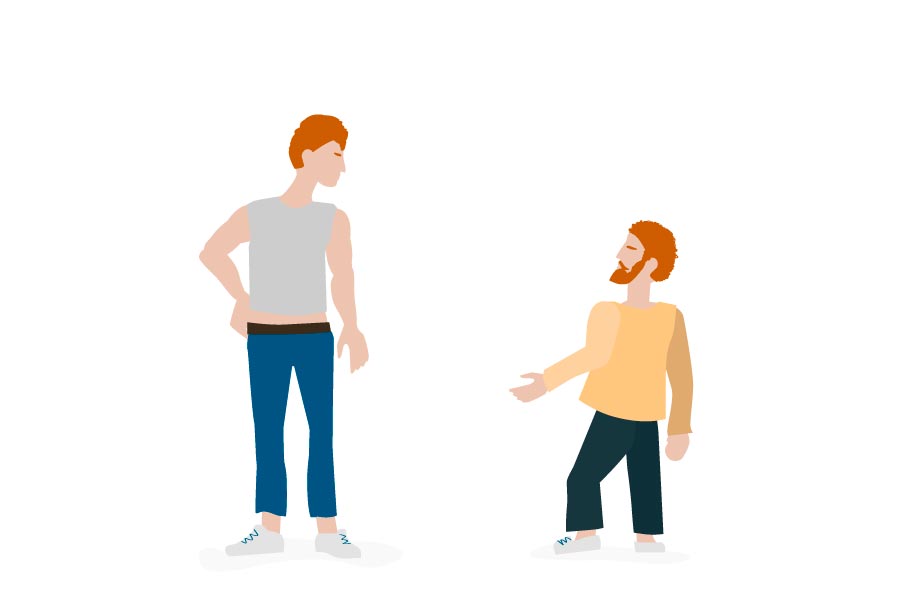
Types of dwarfism:
Dwarfism is of two types. They are:
- Proportionate dwarfism: In this type of dwarfism the head, trunk, hands and legs are proportionate to each other, but are smaller than the average-sized person. It occurs due to hormonal imbalance and can be corrected with hormone injections during the child’s growth.
- Disproportionate dwarfism: It is the common type of dwarfism, in which the body parts are not proportionate to one another. For example, some people may have considerably short arms and legs but the trunk is of normal size.
What are the signs and symptoms of dwarfism?
In addition to short stature, dwarfism is accompanied with the following symptoms based on the type and its cause:
Proportionate dwarfism:
- Slower growth rate than normal
- Short legs, arms and body
- Delayed puberty
Disproportionate dwarfism:
- Short arms and legs, but an average sized trunk
- Short fingers with a wide gap between the middle and ring finger
- Large head, prominent forehead and a flattened nasal bridge
- Bowed legs
- Reduced mobility of the elbows
If disproportionate dwarfism is caused by spondyloepiphyseal dysplasia congenita (a rare genetic condition) then it may cause these signs and symptoms:
- A short neck and trunk
- Shorter arms and legs
- Broad and round chest
- Cleft palate
- Flattened cheekbones
- Hip deformities
- Vision and hearing problems
- Arthritis or any other joint conditions
What are the causes and risk factors of dwarfism?
According to researchers there are more than 300 conditions that may lead to dwarfism. However, genetic disorders are considered to be the most common reasons behind dwarfism. Dwarfism usually occurs when there is a genetic change either in the egg or sperm before conception. The exact reason for this genetic change is unknown and unpreventable.
The following are common causes of dwarfism:
- Achondroplasia, a genetic condition in which the affected individual has one mutated gene related to dwarfism while the other gene is unaffected.
- Turner syndrome, a condition that affects only females. In this condition only one X chromosome is inherited while the second X chromosome is either missing or partly inherited.
- Growth hormone deficiency might be due to genetic mutation.
- Hypothyroidism at young age, in which the thyroid gland is underactive and may lead to poor growth and other problems.
- Intrauterine growth retardation, a condition in which the unborn baby is much smaller than the average.
Other factors, such as malnutrition, growth hormone deficiency, and a family history of dwarfism may also increase its risk.
How is dwarfism diagnosed?
In some cases, the appearance of the child at the time of birth is sufficient to make the diagnosis. Further, the child’s height and weight is measured and compared with average population to confirm dwarfism.
Some types of dwarfism can be diagnosed during the pregnancy through genetic testing. But, in most of the cases dwarfism is not diagnosed until the child birth. An ultrasound helps in making a tentative diagnosis during the baby’s development in the mother’s womb. The condition is confirmed by collecting and testing a sample of amniotic fluid from the mother’s womb.
Blood tests may be necessary to confirm dwarfism associated with hormonal deficiency.
What are the treatment options?
Regardless of the cause, dwarfism cannot be corrected completely. However, treatment is given to correct and relieve problems caused by its complications. The treatment options for dwarfism may include:
Hormonal therapy: It is recommended in children with growth hormone deficiency. This therapy involves daily injections of synthetic human growth hormone. The child treated with this therapy attains close to the average height of a normal person. This therapy can also be recommended in individuals who are concerned about full adult maturation.
Girls with Turner’s syndrome require estrogen therapy and other hormones to reach puberty.
Surgery:
Surgical options are recommended in people with disproportionate dwarfism to:
- Correct the direction of the bone growth.
- Stabilize the shape of the spine.
- Relieve the pressure on the spinal cord.
Physical therapy and orthotics:
These are non-invasive methods to prevent complications associated with dwarfism. Physical therapy helps to regain the strength and range of motion following a limb or back surgery. It is also recommended if dwarfism affects the way a person walks or if it causes pain.
Orthotics are the customized devices that fit into the shoes to improve the foot health and its function. They help the individuals who have problems with balance and other aspects of foot function.
Outlook
Talk to the specialist about your child’s condition. Encourage the child to find out their hobbies and let them get involved in it. Dwarfism may cause several complications. So, it is important for the family members to stay active and support the child for their healthy growth and development.
References:
- https://www.mayoclinic.org/diseases-conditions/dwarfism/symptoms-causes/syc-20371969
- https://medlineplus.gov/dwarfism.html
- https://kidshealth.org/en/parents/dwarfism.html