Our hand and wrist are made of several small bones that are held in place with the help of ligaments. Ligaments are tough tissues that connect one bone to other. They also help in controlling the movement of bones and stabilizing the joint.
Damage of the ligaments may result due to a fall on to the outstretched hand or during certain sports such as rugby or skiing. It may also occur due to other conditions, such as arthritis. This disturbs the normal alignment of the bones in your wrist or hand resulting in pain and inflammation that may continue for several weeks. The affected area may also appear bruised or discolored. When the ligament injury goes undiagnosed or left untreated, the joint involved may heal improperly resulting in prolonged pain and clicking sound in the wrist while performing certain actions, such as gripping.
What is ligament reconstruction?
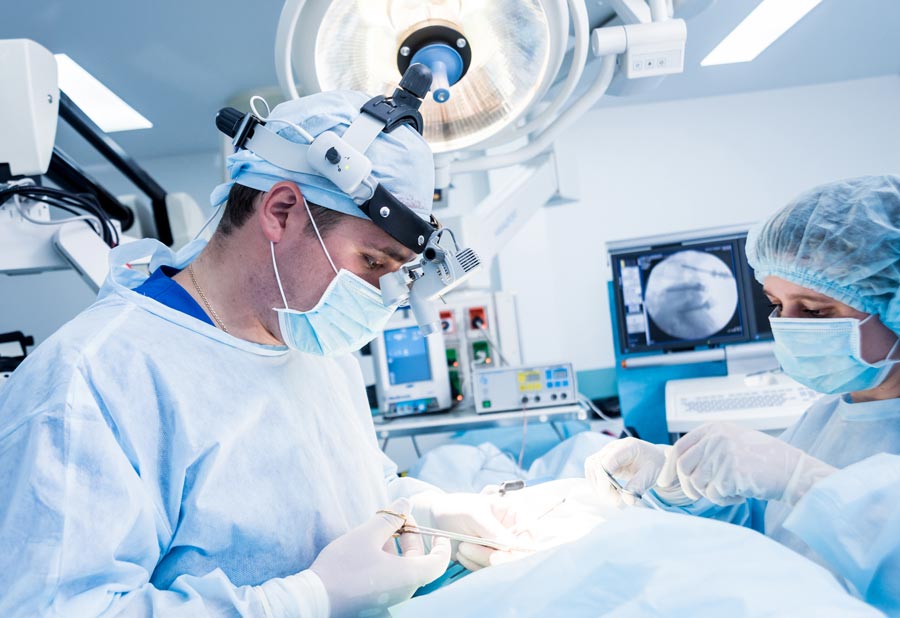
Ligament reconstruction refers to correcting the damaged ligament. The procedure involves in making an incision at the damaged area and replacing the torn ligament with a tendon graft obtained elsewhere from the wrist. Sometimes, metal pins are also required to restrict the bone movement, as the tendons heal.
Indications
The need for ligament reconstruction depends on the extent of trauma. Partial tears in the ligament are best managed through conservative treatments including rest, icing, medications, and a brace to limit the movement. Thus, reducing stress on the ligaments. Strengthening exercises of the muscles surrounding the joint helps to stabilize the joints. However, ligament reconstruction may be necessary when conservative treatments fail to provide relief even after two to three months or in other conditions such as:
- Complete ligament tears
- When the ligament tear was discovered six months or more after the injury
- Pain or instability of the joint under rest or with daily activities
- Carpometacarpal(CMC) joint arthritis (arthritis at the base of your thumb)
- Degenerative joint diseases
How is it performed?
If you are advised ligament reconstruction, specific instructions and basic procedural guidelines are recommended. Adherence to these guidelines ensure safe and successful treatment.
Before the surgery
- Follow the guidelines about the usage of medications or herbal products as provided by the doctor.
- Stop using over-the-counter medications (aspirin or ibuprofen), at least seven days before the surgery.
- Stop eating or drinking anything prior to the surgery as recommended.
- If you are using any splint or brace, it is removed before the surgery.
- Make arrangements for someone to drive you home after the surgery
On the day of the surgery
- You will have to report to the hospital at the scheduled time.
- Remove any jewellery or other accessories, such as glasses etc.
- You may need to change into a hospital gown.
- You will be moved from preoperative area to the operating room.
During the procedure
- The procedure is performed under local or general anesthesia.
- The surgeon makes an incision at the affected area to locate the ligament tear.
- A tendon graft is obtained and is used to replace the torn ligament.
- The graft is usually harvested from the bottom of the same wrist through one or two small incisions.
- It is grafted to the damaged ligament and metal pins may be used to support the repair during healing process.
- Once the procedure is completed, the incisions are closed.
- A splint may be placed to immobilize your wrist until complete recovery.
Post-procedure
- Keep your hand or wrist in elevated position above your heart level as much as possible for the first few days, to prevent excessive swelling and pain.
- Instructions regarding wound care will be given. It is important to keep the operated area clean and dry to prevent infection.
- You need to use pain medication and antibiotics to prevent infection.
- The metal pins implanted may be removed after six to eight weeks.
- Physical therapy may be recommended to strengthen wrist or hand and rebuild strength in your muscles.
Long-term recovery
Prompt surgical intervention and post-surgical care, both remain as the mainstay of better outcomes with ligament injuries. Recovery from ligament reconstruction may take four to six weeks. You are not allowed to perform any actions with the operated hand until you are advised to do so. After six weeks, the pain and inflammation may subside. You may use splint at night and remove it during exercise and daily activities. Physical therapy performed as recommended helps improve functional recovery. It is important to avoid sudden and jerky motions. You may obtain full range of motion between nine to twelve weeks. Splint usage may be limited for night and you may return to work with doctor’s advice.
References
- https://stanfordhealthcare.org/medical-treatments/h/hand-surgery/procedures/after.html
- https://www.lahey.org/lhmc/wp-content/uploads/sites/2/2019/01/Ligament-Reconstruction-Tendon-Interposition2.pdf