Hip replacement surgeries are one of the successful and durable treatments where the damaged sections of the hip joint are replaced with artificial implants. Over time, one may experience pain around the hip or groin area (area of your hip between your stomach and thigh) which can be an indication that the implant may have dislocated, worn out, got loose or infected. To relieve the pain and to restore the mobility of the joint surgeon may recommend a hip revision surgery.
What is hip revision surgery?
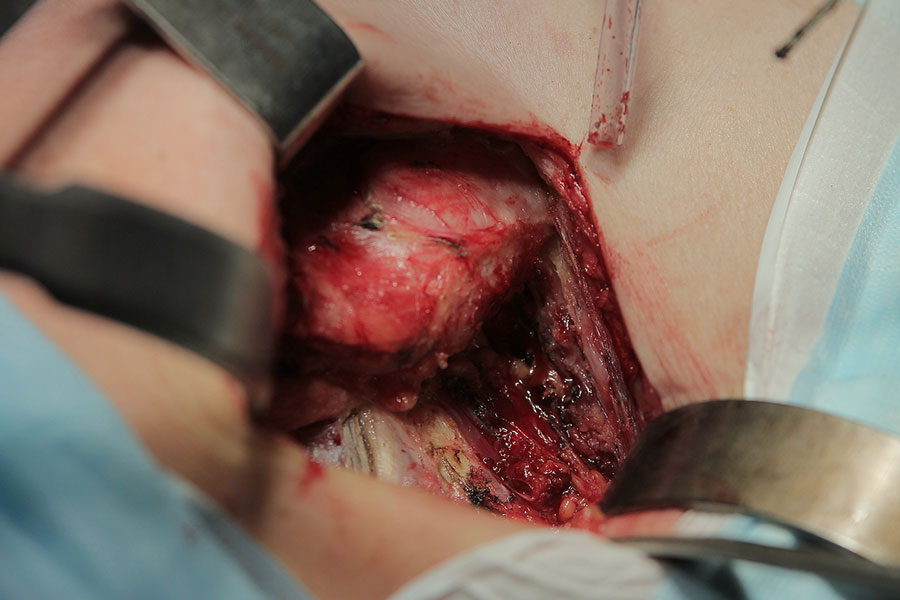
Hip revision surgery also known as second hip replacement surgery, is a procedure where severely damaged, infected or loose artificial hip implants are removed and replaced with a new implant. It may also involve the use of bone grafts to repair the dead bones. Hip revision surgery is more complex compared to other hip surgeries.
What are the indications for hip revision surgery?
Hip revision surgery is recommended for the following reasons:
- Repetitive dislocation of artificial hip implants
- Mechanical failure (wear and tear or loosening of implant)
- Infections especially bacterial infection in and around the prosthesis
- Fracture around the components of hip implants
What are the pre-procedure care for hip revision surgery?
Orthopedic surgeon will recommend for a second hip replacement after diagnosing the hip joint and prosthesis using imaging studies like X-ray. In order to prepare for the surgery, you will be given the following set of instructions to avoid the risk of complication associated with the surgery.
- You will be asked to have a complete health checkup several weeks before the revision surgery to ensure that you are healthy enough to undergo the procedure.
- Doctor may also request for some laboratory test to determine any infections in the body.
- You may be asked to avoid certain medications like aspirin, ibuprofen, etc. few weeks before the surgery as they increase the risk of complications during the procedure.
- You may need to donate blood prior to surgery in case you need a blood transfusion post-procedure.
- Your healthcare team will ask you to arrange someone to drive you home after the surgery and to help you at home.
- You should quit smoking as nicotine will prolong the healing of bone and delay the outcome of the procedure.
- You will be asked not to eat or drink anything after midnight before the procedure as there is risk of vomiting and nausea when you are under anesthesia.
How is hip revision surgery performed?
You will be admitted to the hospital on the day of surgery. After admission, the anesthesia team will evaluate to finalize which type of anesthesia will be best for you. Hip revision surgery is usually performed under general anesthesia which puts you to sleep during the procedure or regional anesthesia which numbs your body from waist down. Once anesthesia is administered, the surgery proceeds as follows:
- The surgeon will make an incision, usually at the side or back of the hip by cutting through skin, muscle and other soft tissues and will expose the previously implanted hip prosthesis.
- Surgeon will examine the parts of the prosthesis to determine which part have become worn, lose or dislocated.
- The damaged parts of the prosthesis will be carefully removed, and specialized revision implants will be inserted and fixed in place using multiple screws
- Bone grafting will be required if there is a significant bone loss in the hip joint.
- Once the revision implants are fixed, surgeon will test the motion of the joint.
- The skin incisions are then closed with stitches or staples.
- X-rays will be taken to assure proper sizing and positioning of the components.
What are the post-procedure care?
As the revision surgery is a complex procedure, you may have to stay in the hospital for a few days.
After surgery, medicines are prescribed by the surgeon to prevent blood clots and for short-term pain relief. Antibiotics are also prescribed to avoid the risk of infection. Gentle exercises may be practiced the next day after the surgery to facilitate blood flow. You will be asked to use canes or walkers in order to avoid putting pressure of body weight on the newly implanted prosthesis.
Prior to discharge, surgeon will give a set of instructions to be followed at home, which will be a combination of healthcare, physical and occupational therapy and rehabilitation. The rehabilitation at home includes:
- Wound care: You should keep the surgical dressings clean and dry to avoid infections.
- Physical therapy: You should continue to exercise and move the joints as directed by the physical therapist to strengthen the joint and the surrounding muscles.
Post-operative visits are required during the recovery period to assess the healing of the hip joint. The recovery time will be long for revision surgeries as large incisions are made for the surgery. It may require at least 6 months for the patient to walk without the use of assistive devices.
Outlook
The hip revision surgery helps to minimize the risks and other complications when the previously implanted hip prosthetic is damaged or infected. Revision hip replacements are complicated surgeries and often require long hospital stay as well as a long period of recovery. Though the results of revision surgery are not as predictable as the primary hip replacement surgery, most patients who undergo revision surgery experience favorable long-term outcomes.
Sources
- Revision total hip replacement. https://orthoinfo.aaos.org/en/treatment/revision-total-hip-replacement/. Accessed on: 27-03-2020.
- Revision total hip replacement: An Overview. https://www.hss.edu/conditions_revision-total-hip-replacement-overview.asp#Things. Accessed on: 27-03-2020.
- Hip Revision. https://my.clevelandclinic.org/health/treatments/17104-hip-revision. Accessed on: 27-03-2020.