Have you experienced a "pop" in the knee when you suddenly stop, change direction, jump or land, followed by swellingand pain in the knees? It may be because one of the ligaments in the knee joint – anterior cruciate ligament is injured; this condition is known as anterior cruciate ligament (ACL) injury. Even though it is considered a sporting injury, in many countries the most common mode of injury is a two wheeler accident.
What is anterior cruciate ligament (ACL) injury?
Anterior cruciate ligament is one of the knee ligaments that are critical for the stability of the knee joint. This ligament is made of tough fibrous tissue to control excessive knee motion by limiting the joint movement. A tear or sprain in this ligament occurs with a sudden change in direction or a sudden stop against a locked knee. You may experience a pop sound, followed by swelling and severe pain in the knee.
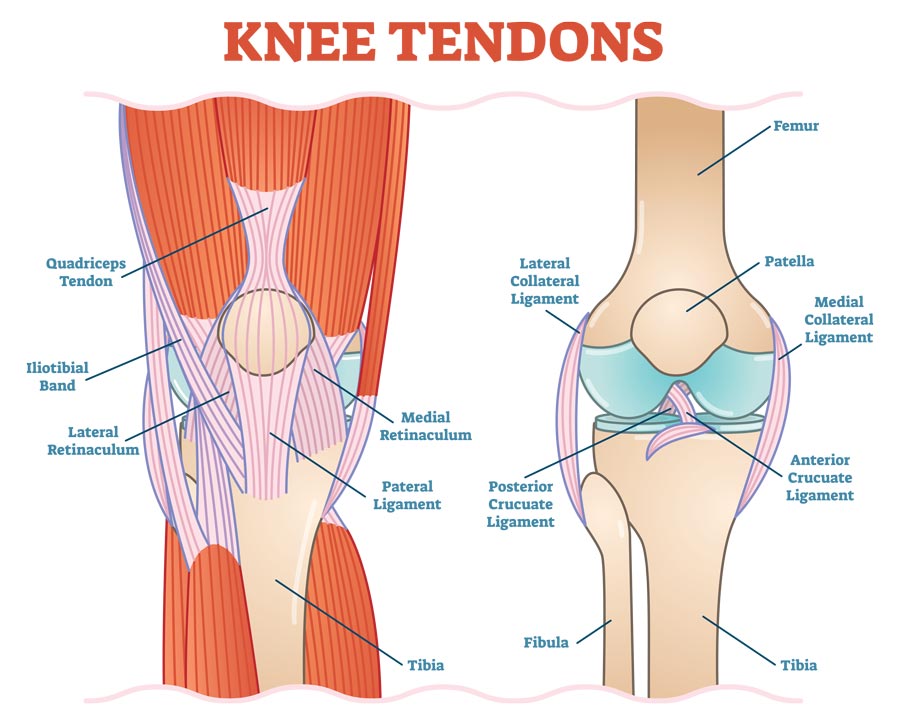
Injured ligaments are considered as ‘sprains’ and are graded based on the severity of the injury:
- Grade 1 sprains: The ligament is mildly damaged; it is slightly stretched but not torn and is keeping the knee joint stable.
- Grade 2 sprains:The ligament is stretched to the point where it becomes loose.
- Grade 3 sprains: The ligament is completely torn into two pieces, and the knee joint becomes unstable.
What are the symptoms associated with anterior cruciate ligament (ACL) injury?
The early symptoms of ACL injury are as follows:
- A loud "popping" sensation in the knee
- Rapid swelling and pain in the knees
- Inability to continue activity
- Loss of full range of motion
- Tenderness along the joint line
- Discomfort while walking
- Instability with weight bearing
What are the causes and risk factors of anterior cruciate ligament (ACL) injury?
The anterior cruciate ligament can be injured in several ways:
- Sudden change of direction
- Rotating your firmly placed foot
- Improper landing from a jump
- Stopping suddenly
- Getting a direct and hard blow to the knee, such as in a football tackle
- Road traffic accident where the weight is uncontrolled and predominantly on one limb.
Prominent risk factors include:
- Sports persons who participate in contact sports like soccer, football, and basketball are more likely to injure their anterior cruciate ligaments.
- Female athletes are known to have a higher risk of an ACL tear while participating in sports. Though the exact reason is not defined, it may be due to the differences in anatomy, muscle strength and hormonal influences.
How is anterior cruciate ligament (ACL) injury diagnosed?
The primary diagnosis begins with a physical examination, where your physician will ask about your symptoms, medical history and will examine the tenderness and swelling of the knee and its moving patterns. The physical examination is followed by imaging tests like X-rays, MRI’s to confirm the diagnosis and determine the severity of the injury.
What are the treatment options for anterior cruciate ligament (ACL) injury?
The treatment options vary based on the patient's individual needs and the level of activity performed by the patient before the injury.
Nonsurgical treatment may be appropriate for patients who are less active, do not participate in heavy manual work and sports. Surgical repair/reconstruction is recommended for those who want to return back to their heavy manual works or continue their sport.
The treatment options for ACL injury varies according to the severity of the injury:
For mild (Grade 1) injury, first aid care can reduce pain and swelling. The R.I.C.E. protocol can be followed in these cases:
- Rest: Avoid activities that trigger the pain and allow the joint to rest for at least 48 hours.
- Ice: Apply ice pack (not directly to the skin) immediately after the injury for 20 minutes 5-6 times a day to reduce swelling.
- Compress: Wear an elastic compression bandage to reduce the swelling on the injured area.
- Elevate: Try to keep the injured knee above the level of the heart, to reduce swelling and accelerate draining of excess fluids.
For moderate (Grade 2) injuries, doctor may recommend to wear braces for immobilizing your knee and to stabilize it. As an extended protection, use crutches to avoid putting weight on your leg. This will be followed by physical therapy in order to restore functions of your knee and strengthen the leg muscles that support it.
For severe (Grade 3) injuries, your doctor may suggest a surgical treatment option where the torn ligament will be replaced with a tissue graft. The graft will act as a platform for the new ligament to develop (rebuilding the ligament). The healing time in surgical method may take up to six months which in turn reduces the risk of reinjury.
Rehabilitation: Rehabilitation therapy after any treatment for correcting the ACL injury will help you to regain your knee strength and motion, and assist you to get back to your normal activities.
How can you prevent anterior cruciate ligament (ACL) injury?
Since these injuries are usually caused by accidents or sudden fall, it is difficult to prevent them. But, following these measures can help in reducing the risks of the injury.
- Proper training and exercise to increase the core strength and strengthen the leg muscles will help to reduce the risk of ACL injury.
- Following instructions from your physical therapist, athletic trainer can help you in reducing chances of getting injured.
- You can also wear knee braces during vigorous athletic activity like football, basketball, etc.
Sources:
- Anterior Cruciate Ligament (ACL) Injuries. https://orthoinfo.aaos.org/en/diseases--conditions/anterior-cruciate-ligament-acl-injuries/. Accessed on: 17-02-2020.
- ACL injury. https://www.mayoclinic.org/diseases-conditions/acl-injury/symptoms-causes/syc-20350738?page=0&citems=10. Accessed on: 17-02-2020.
- ACL injury. https://www.mayoclinic.org/diseases-conditions/acl-injury/diagnosis-treatment/drc-20350744. Accessed on: 17-02-2020.
- Anterior cruciate ligament (ACL) injury. https://medlineplus.gov/ency/article/001074.htm. Accessed on: 17-02-2020.