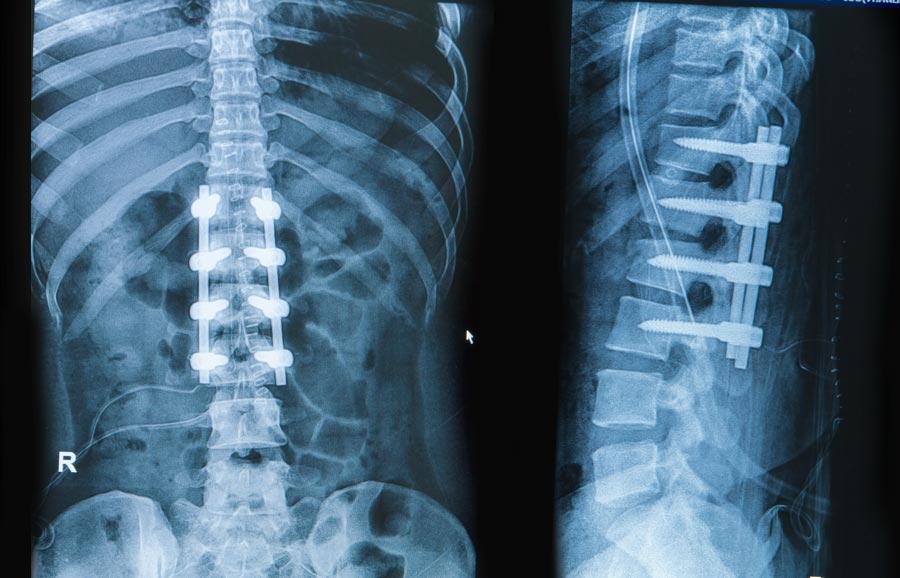
Spine fusion is a surgical procedure in which two or more vertebrae (small interlocking bones that form the spine) are permanently fused together into a single bone. The main aim of this procedure is to improve stability, eliminate back pain, and correct any spine deformities by preventing movement between the vertebrae.
This procedure involves usage of pieces of bone or a bonelike material to connect the space between the spinal vertebrae.
Why is a spine fusion surgery performed?
Spinal fusion prevents the mobility between the two vertebrae and helps in relieving symptoms of back problems, such as:
- Herniated disk or slipped disc
- Fractured vertebra
- Spinal stenosis (narrowing of spinal canal)
- Spondylolisthesis (slipping of one vertebra over the other causing pain)
- Degenerative disk disease
- Scoliosis (curvature of the spine)
- Kyphosis (rounded or hunched back)
- Spinal instability due to tumors, infections or arthritis
Preparing for spine fusion surgery
Preparation for spine fusion surgery is almost same like for other surgical procedures. Before the surgery, the patient should inform the doctor about the following:
- Presence of any illnesses, such as cold, flu or herpes.
- Alcohol use or cigarette smoking, which may slow down the healing process.
- Use of any over-the-counter medicines.
Certain medicines, such as blood-thinners and painkillers may increase the risk of bleeding during and after the surgery. Hence, the doctor may either alter the dose or advise the patient to stop its use for a few days. Additionally, the patient need to fast for at least 8 hours before the procedure. On the day of the surgery the recommended medicine must be taken with a sip of water.
Procedure of spine fusion surgery
Spinal fusion surgeries have been performed since several years. There are several techniques available to fuse the spinal vertebrae. Also, the surgeon may choose any of the following approaches to reach the spine:
- If the spine is approached from the front it is referred to as an anterior approach.
- If the spine is approached from the back it is known as posterior approach.
- If the spine is approached from the side it is referred as lateral approach.
However, based on the location and severity of the disease the surgeon will use the right technique for the patient.
Steps involved
- General anesthesia is administered, so that the patient does not feel any pain during the procedure.
- The patient is positioned on the operation table with a blood pressure cuff on the arm and heart monitor leads on the chest to monitor blood pressure and heart rate during surgery.
- The bone graft is obtained either from a bone bank or from the patient. If the patient’s own bone (autograft) is used then the surgeon makes an incision near the pelvic bone and take a small section of it. A bone graft stimulates the bone production and helps in healing.
- Now, an incision (cut on the skin) is made at the site of fusion to place the bone graft.
- Upon placing the bone graft between the vertebrae, the surgeon may place screws, plates or rods to hold the spine still. Finally, once the procedure is done the surgeon will close the incision with stitches or staples.
Recovery from spine fusion surgery
Hospital stay is advised for about 3 to 4 days. During the stay the patient is advised to take the prescribed medicines to manage pain. Certain antibiotics may also be given to reduce the risk of infections. Once the symptoms starts to subside the surgeon may plan for the discharge. Before discharging the patient. The doctor may provide instructions regarding:
- The usage of a braces to immobilize the spine.
- New techniques to sit, stand and move due to the limited flexibility.
- A gradual shift to a normal solid diet.
- Physical rehabilitation to strengthen the spine.
- When to resume normal activities.
Based on the age and overall health of the patient, it takes at least three to six months for complete healing and recovery. Certain lifestyle modifications, such as maintaining healthy body weight, having healthy diet, and doing regular exercise are to be followed for best results.
What are the risks associated with spine fusion surgery?
- Infection at the site of incision
- Bleeding
- Blood clots
- Poor wound healing
- Respiratory problems
- Persistent pain at the site of bone graft
- Injury to the blood vessels and nerves near the spine
- Heart attack or stroke during the surgery (rarely)
- Reaction to anaesthesia or other medicines
References
- https://orthoinfo.aaos.org/en/treatment/spinal-fusion/
- https://www.mayoclinic.org/tests-procedures/spinal-fusion/about/pac-20384523
- https://www.webmd.com/back-pain/spinal-fusion-facts#1-4