Every year in India alone, more than 10 million cases of arthritis are reported. Osteoarthritis is the most common form of arthritis which has a significant effect on the quality of life. It occurs as a result of the wearing down of cartilage at the end of bone joints such as the hands, knees, hips and spine. This condition can’t be cured but there are treatment options to help manage the symptoms.
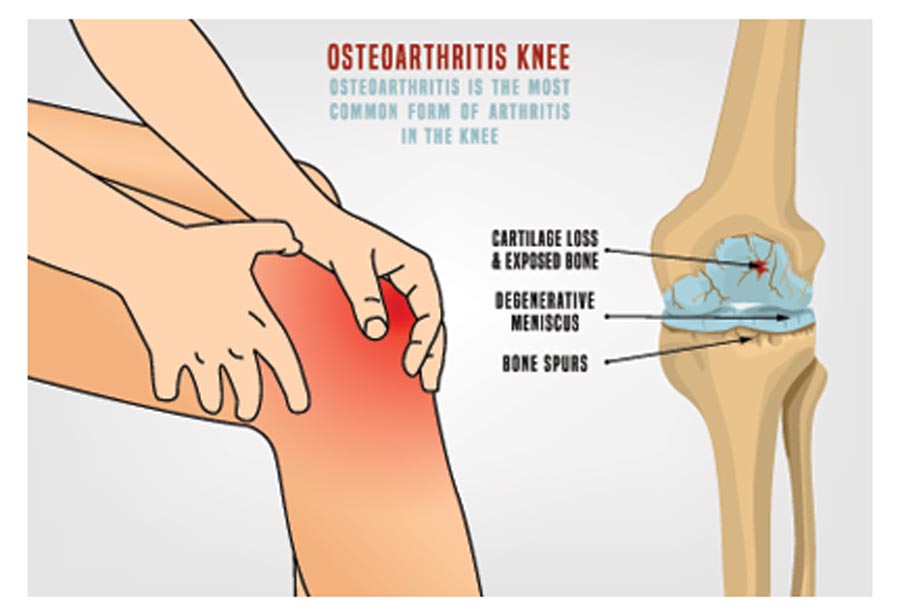
Onset and stages of Osteoarthritis
The onset of this condition is generally classified in four stages. These are as given below:
Stage 0: When no signs of osteoarthritis are seen it is called stage 0. In this stage, the knee health remains normal, having no impairment or damage.
Stage 1: The next stages that follow may have minor symptoms of the disease. There may be bony growths where the bones meet in the joints. A person in this stage does not experience any pain or discomfort.
Stage 2: Stage 2 reveals mild conditions of bone spur growth as revealed in an X-ray. Synovial fluid is also present in sufficient amounts to facilitate joint movements.
Stage 3: The third stage of osteoarthritis is a moderate stage, in which the cartilage between bones shows considerable damage.
Stage 4: When the condition becomes acute, it is called severe. Not everyone who has osteoarthritis reaches till the stage four. The condition may get stabilized long before it comes to the acute stage.
Symptoms of Osteoarthritis
Osteoarthritis can develop in any joint but the most commonly affected areas are knees, hands, spine, and hips. The most common symptoms of this disease are given below:
- Pain
- Stiffness
- Swelling
- Joint deformity
- Muscle weakening
Sometimes, there may be tenderness and discomfort when pressing the area with your fingers. The pain associated with this disease becomes acute as the stage advances. It is hence, advisable to seek medical aid in the early stages.
The increased inflammation and swelling can be attributed to overproduction of the synovial fluid in the joints. Some of the broken pieces of cartilage may float in this fluid, causing more pain. This pain decreases your daily activity levels and restricts movement. In case of severe osteoarthritis, one may experience buckling and locking of knees and other joints, resulting in falls.
Diagnosis of Osteoarthritis
Osteoarthritis and rheumatoid Arthritis (RA) are two different diseases altogether and must not be confused. While osteoarthritis is a degenerative disease, RA is an autoimmune disorder. If you are not sure about the type of arthritis you have, it is advisable to consult your doctor.
X-ray: Sometimes, osteoarthritis can be detected in the early stages if there has been an accident that caused a fracture. In such cases, an X-ray needs to be taken. An X-ray shows bone spurs around a joint.
MRI: An MRI can also be helpful in diagnosing osteoarthritis. It gives detailed images of the bone and cartilage.
Lab tests: To rule out RA, a blood test is carried out. An analysis of the joint fluid is carried out to determine that the swelling is not due to gout or other infections.
Treatment options for Osteoarthritis
Symptomatic treatment is available for managing osteoarthritis. Some measures can be taken at home also which provide relief. Some of these lifestyle changes are given below:
- Pharmacological management- Depending upon its location and severity, there are over-the-counter drugs called non-steroidal anti-inflammatory drugs (NSAIDs) available. These are painkillers that work by reducing inflammation. Oral and topical analgesics may also come in handy.
- Exercise regularly- Regular physical movements, spanning 20 to 30 minutes is helpful in relieving stiffness of the joints and strengthening the muscles. Gentle exercises like swimming, walking, Tai Chi and Yoga helps to a great extent. Stretching exercises for the knees, hip or back is proven to bring relief.
- Watch your weight- Heavily built people are more prone to osteoarthritis as their body weight causes the muscle joints to strain. Weight management would also help ward off heart diseases and diabetes.
- Take adequate rest- Proper rest and sleep go a long way in helping in pain management. Excessive physical activities should be avoided.
- Heat and cold therapy: Applying cold or hot compress to sore joints for 15 to 20 minutes several times a day helps the swelling to subside and also alleviates pain.
- Surgery- This is done if other measures haven’t been helpful in treating osteoarthritis and in cases where there are joints which are severely damaged. An arthroscopic surgery or a joint replacement surgery is performed to treat knee or hip joints. If joint replacement cannot be done, your doctor may suggest fusing your joints in a permanent position. This is called arthrodesis.
- Dietary plan- Eating foods that are rich in Vitamin C and D, beta-carotene and omega-3 fatty acids are known to be beneficial in treating osteoarthritis. Fruits and vegetables like apples, onions, shallots and strawberries contain anti-oxidants should be consumed as they bring relief in pain and inflammation to the joints.