Ever thought why our spine is curved rather than being straight? The natural ‘S’ shaped curvature provides flexibility, support and also acts as a shock absorber from mechanical stress. However, any abnormal curvature from what is normal could be a problem.
When your spine is curved abnormally (sideways) it is known as scoliosis. More appropriately it could be defined as three-dimensional rotation of the spine as the vertebrae (individual bones) in the spine may also be rotated or skewed in severe case. It usually occurs during the growth spurt before the puberty.
Studies on development of scoliolisis are limited due to the complexity and lack of animal models. However, a recent breakthrough in the research of scoliosis identified zebrafish as an animal model system for the human scoliosis. Its transparent larval body and natural susceptibility to spinal curvature makes it a powerful tool for research.
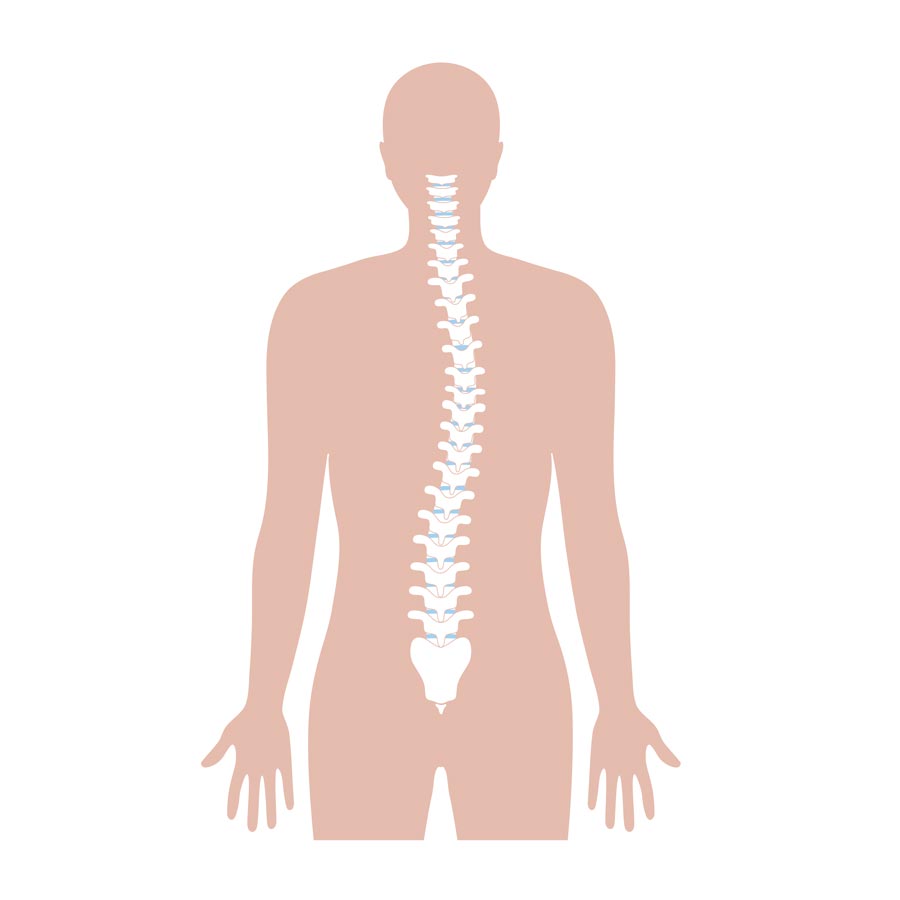
What are the types of scoliosis?
The different types of scoliosis include:
- Idiopathic scoliosis: Most common type of scoliosis that is developed due to unknown cause.
- Infantile idiopathic scoliosis: Develops before three years and commonly affects boys.
- Juvenile idiopathic scoliosis: Develops between three to ten years and commonly affects girls.
- Adolescent idiopathic scoliosis: Develops during the age of 11 or older i.e. adolescence period from the onset of puberty until skeletal maturity, especially during growth spurt and is commonly seen in girls.
- Adult scoliosis: Uncommon type that could be caused due to degenerative joint problems.
What are the symptoms of scoliosis?
Scoliosis could range from mild, moderate to severe. Severe spinal curve could be disabling and can also limit the space within the chest that may interfere with lungs functionality.
The symptoms may include:
- Uneven shoulders
- Tilted waist
- Head that is not centered (with reference to your pelvis)
- One or both hips are raised than normal
- One side of your rib cage appears to be higher, while bending
- Body leaning towards one side
What are the causes of scoliosis?
Scoliosis may occur due to the following:
- Neuromuscular conditions like cerebral palsy or muscular dystrophy
- Conditions, such as osteoarthritis
- Spinal injuries or infections
The possible causes for the idiopathic scoliosis may include
Genes: Sometimes, scoliosis run in families.
Congenital conditions: Congenital abnormalities, such as spinal deformities related to lack of proper development of vertebrae or fusing with one another.
Hormonal problems: Hormones are suspected to contribute in causing scoliosis as it is usually seen in pre-adolescence.
Other abnormalities: Problems with connective tissue or nervous system.
How is scoliosis diagnosed?
During diagnosis, the doctor may obtain detailed medical history and also investigate about the family history of the condition. A physical examination is done to check for any abnormalities at your back, chest, hip, legs or feet. The physician may ask you to bend forward from the waist, to see if one side of the rib cage is prominent when compared with other.
The doctor may recommend imaging tests to confirm the diagnosis or to rule out other conditions. They include:
X-ray: X-rays helps to reveal and measure the spinal curvature, and other potential causes for pain, such as fractures or deformities.
Computed tomography (CT): A CT scan produces images of the spine, and the surrounding structures like soft tissues and blood vessels with greater details and clarity. This test helps in accessing the underlying abnormalities.
Magnetic resonance imaging (MRI): MRI provides more detailed images of your spine and surrounding structures. It helps in identification of enlargement, degeneration and other deformities related to your spine as well as tumors that may cause the condition.
How is scoliosis treated?
Usually scoliosis may not require any treatment. The decision for the treatment may depend on your age; severity, pattern, and location of the curve. When a child has mild scoliosis, he/she may be closely monitored by performing regular x-rays. This helps to check if the curve is getting worse or is stable.
Braces: If the child is still growing, he/she may be recommended to wear a brace to prevent further progression of the curve. The physician may recommend you to wear it during the night, day or both. Children with this condition can perform their regular activities with few restrictions. Once the doctor confirms that there is no further growth in the bones, the child can discontinue the usage of braces.
Surgery: Surgery may be recommended to treat progressive scoliosis or to straighten severely curved spine. The common procedure performed to treat scoliosis includes spinal fusion. During this procedure, the physician tries to straighten the spine and hold it in place with the help of screws and rods. Then the vertebrae of your spinal cord are fused or connected together with the help of metal rods, screws or bone implants to prevent worsening of the condition. The implants are usually permanent.
What is the outlook for scoliosis?
As scoliosis tends to continue to curve as the child grows, early diagnosis and treatment are the main factors for better outcomes. Once the child growth is completed, their spine usually stops to curve further. After treatment, people with scoliosis could continue living an active life. Exercising and being physically fit helps to keep bones strong and also improves the sense of well-being.
References
- https://www.mayoclinic.org/diseases-conditions/scoliosis/diagnosis-treatment/drc-20350721
- https://kidshealth.org/en/teens/scoliosis.html
- https://www.aans.org/Patients/Neurosurgical-Conditions-and-Treatments/Scoliosis
- https://healthywa.wa.gov.au/Articles/S_T/Scoliosis