Arthritis in any part of knee joint will result in the damage of the articular cartilage (cartilage in the joint). When this cartilage tears away, it will expose the bone surfaces. Thus the affected limb will not move so freely and easily. If the cartilage tears occur in both side of the knee then the space between these bones will reduce symmetrically. In some cases, like early-stage osteoarthritis, there will be cartilage damage on only one side of the knee joint and the knee will begin to bend due to the asymmetric joint space narrowing. To relieve the symptoms of arthritis and to realign the leg, surgeon may recommend a correction surgery known as osteotomy of knee.
What is knee osteotomy?
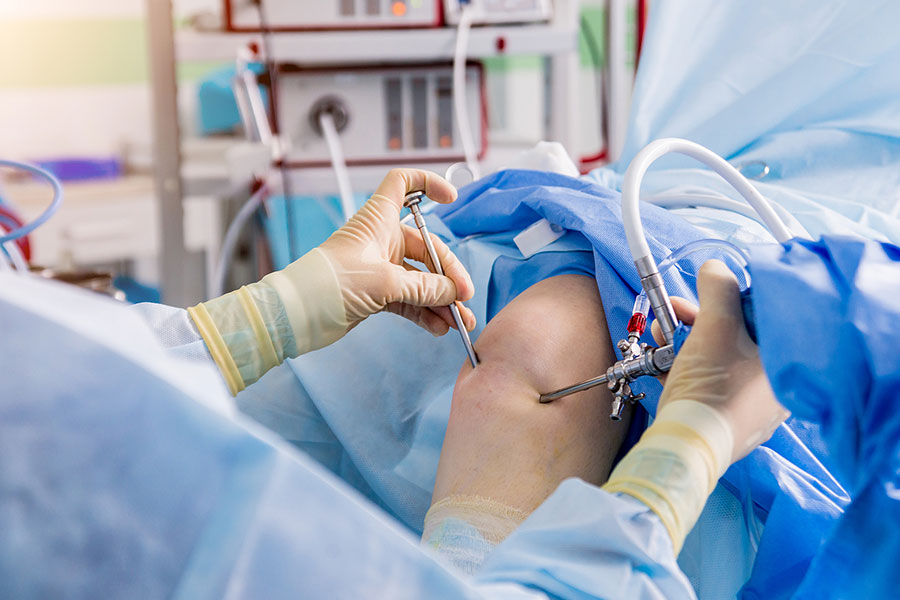
Knee osteotomy is a surgical procedure that involves making a cut in any one of the bones in your lower leg in order to correct the knee’s alignment and to improve its function.
The two most common types of knee osteotomies are high tibial osteotomy and femoral osteotomy. During knee osteotomy, the bones in the tibia (shin bone) or femur (thigh bone) are cut, reshaped and realigned. This will shift your body weight from the damaged part of your knee to a healthy part.
When is knee osteotomy recommended?
Knee osteotomy is usually recommended for patients with early-stage osteoarthritis that has damaged one side of the knee joint and for young osteoarthritis patients (age less than 60) who are not considered for total knee replacement surgery. The best candidates for the surgery are those who:
- Have a healthy weight
- Have good knee stability
- Physically active
- Have moderate arthritis with significant knee pain
- Are relatively young
What are the pre-procedure care?
Your surgeon will conduct X-rays of your knee to plan the surgery and to determine how much correction of the deformity is needed. Before undergoing the surgical procedure, you have to follow certain instructions given by your healthcare provider. These include:
- Stop taking some medications temporarily at least one week prior the procedure.
- Do not eat or drink anything after midnight on the day of your procedure.
- Arrange someone to drive you home and assist you after surgery.
- Stop smoking and drinking as it may prolong the recovery time after the surgery.
How is knee osteotomy performed?
Most of the knee osteotomy procedures are performed by the following two methods:
- Opening wedge: The surgeon will cut open a section of bone and a bone graft is inserted to fill the gap. The graft is the fixed in the position using metal plates and screws.
- Closing wedge: The surgeon cuts and removes a wedge-shaped bone from the knee joint and the resulting gap is closed by bringing the cut edges of the opening together.
For the knee osteotomy surgery, you will be admitted in the hospital on the day of the surgery. Once you are admitted in the hospital, a doctor from the anesthesia team will evaluate you and finalize the type of anesthesia for the procedure. For knee osteotomy either general (put you to sleep) or spinal (numb your body from the waist down) anesthesia can be used. The procedure of the surgery is as follows:
- Before the procedure, you will be administered with anesthesia along with an antibiotic to prevent infection.
- Surgeon will make an incision at the front of your knee, starting below your kneecap.
- Depending on the location of the damage, the surgery might involve either your shinbone or your thighbone.
- For open wedge method, surgeon will cut a wedge-shaped bone in the painful side of the knee and a bone graft is placed to fill the gap. The graft is fixed in place with plate and screws.
- For closed wedge method, surgeon will cut and remove a wedge-shaped bone and the resulting gap is closed by bringing the cut edges together and secure them with plate and screws.
What are the post-procedure care?
You will require a few days of hospital stay after the procedure. Medications for pain and infections will be prescribed. You will likely use walking aids like crutches or a walker for several weeks to avoid putting too much weight on the knee until it heels. Physiotherapist will provide instructions about leg exercises to strengthen the muscles and assist you in using crutches to walk.
Once you are comfortable and can walk using crutches, surgeon will allow you to be discharged. It can take up to six months to return to normal life after a knee osteotomy. It is important to perform exercises regularly whilst at home to optimize the outcome of the surgery.
Outcome
Knee osteotomy relieves arthritis pain and will delay the need for a total knee replacement by 10 to 15 years for arthritic patients. Knee osteotomy is a highly successful treatment procedure providing good function and correcting the poor knee alignment. Furthermore, knee osteotomy offers the patients to return to high-impact activities, such as jogging or playing basketball, which is not the case after total knee replacements.
Sources
- Osteotomy of the Knee. https://orthoinfo.aaos.org/en/treatment/osteotomy-of-the-knee. Accessed on: 30-03-2020.
- Knee osteotomy. https://www.mayoclinic.org/tests-procedures/knee-osteotomy/about/pac-20394514. Accessed on: 30-03-2020.
- Knee Osteotomy. https://my.clevelandclinic.org/health/treatments/21159-knee-osteotomy. Accessed on: 30-03-2020.