Our spine is made up of small bones called vertebrae that are structurally balanced for optimal flexibility and support of the body’s weight. The spine is divided into three segments – lumbar spine, thoracic spine and cervical spine. The normal spine is curved to form an “S-shape” but when those curves are exaggerated, misaligned or displaced they are considered as spinal deformities. The common signs of spine deformities are “C” shaped curvature, protruding shoulder blade and uneven shoulder and hip.
Moderate and flexible spine deformity can be corrected by non-surgical methods like- physical therapy and medications. However, a spinal osteotomy is needed for severely rigid and fixed spine deformities.
What is spine osteotomy?
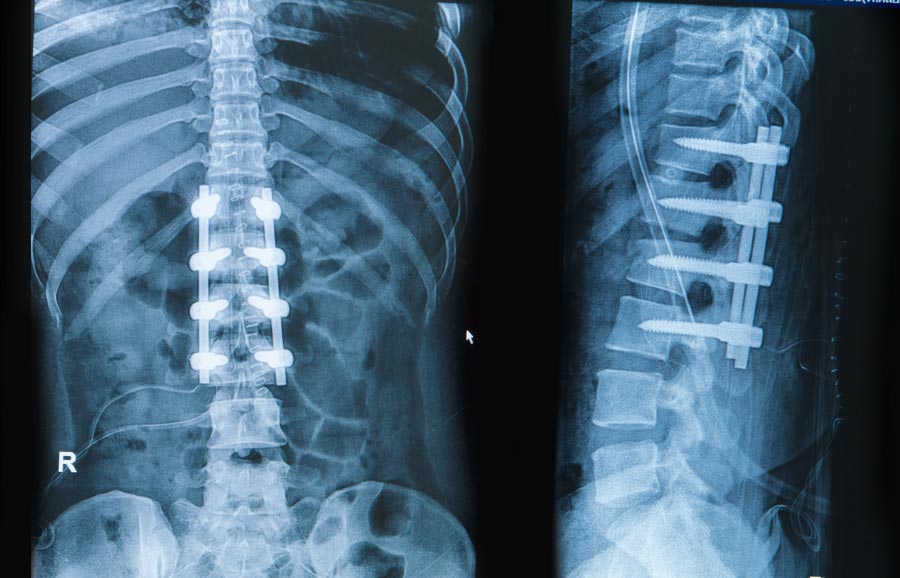
A spinal osteotomy is a surgical procedure used to correct certain deformities of spine. In this procedure, a section of the spinal bone is cut and removed for correction of spinal alignment. The spine osteotomy is also considered as a cosmetic surgery, especially in young patients to improve their cosmesis. Spine osteotomies can be broadly divided into three main types - posterior column osteotomy (PCO), the pedicle subtraction osteotomy (PSO) and vertebral column resection (VCR).
When is spine osteotomy recommended?
Spine osteotomy is usually recommended to correct the following conditions:
- Severely deformed spine leading to nerve compression
- Fixed or rigid spinal bone
- Congenital deformity (deformity present at birth)
- Age-related degeneration of spinal bones
- Tumors or infections that cause spinal deformity
In addition to the above conditions, spine osteotomy is recommended when the nonsurgical treatments do not relieve symptoms and the deformity is getting worse over time.
What are the pre-procedure preparations for spine osteotomy?
Before proceeding with surgery, you will have an appointment with the surgeon to prepare you physically and psychologically for the spinal surgery. The pre-procedure preparations include:
- Stop certain medications: You will be asked to stop certain medications like non-steroidal anti-inflammatory medications (NSAIDs), anti-coagulants, diuretics, etc. which may increase the risk of bleeding or other complications during surgery.
- Quit smoking: You should stop smoking before the surgery as it is extremely harmful for spine health. Nicotine will prolong the potential bone healing and surgical outcomes.
- Health check-ups: It is important to evaluate your health status to ensure that you are healthy enough to undergo the surgery.
- Assistance: You will be asked to arrange someone to drive you back home and to assist you at home during the recovery period.
In addition to the above preparations, you will be asked not to eat or drink anything after midnight before your surgery.
How is spine osteotomy performed?
After hospital admission, you will be taken to the preoperative area, where the healthcare team will review your health. An intravenous line (IV) will be started in your arm and antibiotics will be given before, during and after surgery. After shifting to the operation room, the anesthesiologist will inject anesthesia through the IV line.
After hospital admission, you will be taken to the preoperative area, where the healthcare team will review your health. An intravenous line (IV) will be started in your arm and antibiotics will be given before, during and after surgery. After shifting to the operation room, the anesthesiologist will inject anesthesia through the IV line.
- Smith-Petersen Osteotomy (SPO): SPO is recommended for those patients who need relatively small correction in alignment of spinal bones. The procedure corrects the kyphotic spine conditions (excessive outward curve of the spine) by shortening the posterior column.
Procedure: A section of bone is removed from the back of the spine and thereby the spine will lean more toward the back. Both the posterior ligaments and the facet joints (joint between two adjacent vertebrae) are removed from that area. The spinal correction is performed through the vertebral disc space.
For correcting condition like lordosis (inward curving of the lower back), this method must be performed at one or multiple locations along the spine. - Pedicle Subtraction Osteotomy (PSO): PSO is recommended for those patients with moderate to severe spinal deformity. This method involves all three posterior, middle, and anterior columns of the spine.
Procedure: The posterior ligament and facet joints are removed as similar to a SPO. In addition to this, a triangular wedge through the pedicles (short and thick bone that provides protection for the spinal cord and nerves at the side) is also removed and the posterior spine is shortened.
The PSO technique is ideal for patients with severe sagittal (longitudinal plate) imbalance and it provides more correction of the lordosis than SPO. - Vertebral Column Resection Osteotomy (VCR): VCR osteotomy is recommended in severe spinal deformities which cannot be corrected by other methods. The technique involves the complete removal of a single or multiple vertebral bodies. VCR osteotomy allows maximum correction that can be achieved with any spinal osteotomy.
As the procedure requires a complete removal of bones, spinal fusion is also performed along with this procedure. It involves the use of a structural autograft, structural allograft or metal cage.
Major spinal deformities like kyphosis, scoliosis (a side-to-side curve) and lordosis can be corrected by VCR osteotomy.
What are the post-operative cares?
After spine osteotomy, you may require a hospital stay of 5-7 days. You may experience pain in the first few days after surgery which is usually controlled by pain medications. If you have undergone spine fusion, then spine should be kept in proper alignment, for which you will be taught how to move properly sit, stand, sleep and walk. Physiotherapy will begin the next day after the surgery as it will help the patient to build strength and flexibility of the spinal column.
Prior to discharge, you may be given some instructions about medications and rehabilitation procedure at home. Physiotherapist will provide a home exercise program to improve the strength and function of the spinal column. Activities like lifting heavy objects, driving, or any strenuous household activities must be restricted for several weeks. The recovery time depends on the extent of surgery, other medical conditions, and how closely the instructions are followed.
Outlook
Spine osteotomy is recommended for patients whose deformity is progressing and non-surgical methods are ineffective. It aims to correct the deformity of spinal curve, with a goal of relieving pain and other associated symptoms. Spine osteotomy also prevents the curvature from worsening in the future. Over the past decades, osteotomies are widely used in spine corrections and have successful outcomes. Spine osteotomy procedure requires less hospital stays compared to other spine surgeries.
Sources
- Osteotomy Techniques for Spinal Deformity. https://www.ncbi.nlm.nih.gov/pmc/articles/PMC5125345/. Accessed on: 26-03-2020.
- Spinal osteotomies: indications, limits and pitfalls. https://www.ncbi.nlm.nih.gov/pmc/articles/PMC5420824/. Accessed on: 26-03-2020.
- https://www.columbiaspine.org/treatments/osteotomy/. Accessed on: 26-03-2020.