Tendons are the fibrous band of tissues that attach muscles to the bones. Tendonitis is the painful inflammation of tendons. If tendonitis is left untreated, it can lead to the rupture of the tendons which can only be corrected by surgery.
What is tendonitis?
Tendonitis is the irritation or inflammation of the tendon. It usually affects the elbows, wrists, fingers, thighs or other parts of the body. Based on the specific tendon of the body part affected, the names include Achilles tendonitis (involves the calf muscles of the heel bone), jumper’s knee, golfer’s elbow, swimmer’s shoulder, and pitcher’s shoulder.
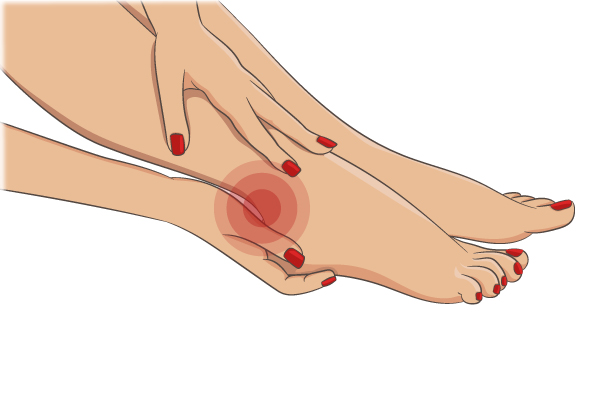
What are the symptoms of tendonitis?
Tendonitis leads to a dull ache around the affected area or joint, which increases on movement. The area is tender to touch and there may be a small degree of swelling. Stiffness in the area can make it difficult to move the affected part of the body.
What are the causes and risk factors of tendonitis?
Tendonitis occurs due to the overuse of the body parts or an injury which puts a strain on the tendons. The risk of tendonitis increases if this repetitive motion is performed incorrectly.
For example, the use of improper techniques while playing can increase the load on the tendon and leads to tendonitis.
Risk factors for developing tendonitis are:
- Weakening of tendons and loss of their elasticity in old age
- Certain diseases such as diabetes, and rheumatoid arthritis
- Participation in certain sports such as tennis, basketball, bowling, and golf
- Jobs that involve physical exertion, overhead lifting, etc.
How is tendonitis diagnosed?
The diagnosis involves taking a detailed medical history and performing a physical examination of the painful area. Also, the tenderness and range of motion of the area are examined. The doctor might ask questions regarding any recent or past injuries to the area and about the routine physical activities carried out by the patient.
If it is not possible to confirm the diagnosis, the doctor may order for one or more of the below tests:
- X-rays
- Magnetic resonance imaging (MRI) scans
- Ultrasounds
These tests help to rule out other conditions with similar signs and symptoms.
What are the treatment options?
The main aim of the treatment is to reduce inflammation and relieve pain.
Most of the cases of tendonitis improve with resting the area, applying ice packs and compression and elevating the area, especially while sleeping and whenever possible.
If the condition does not improve with the above self-care approach, the doctor may recommend the below medications:
- Pain relievers such as aspirin, ibuprofen, naproxen sodium are effective in relieving pain without causing side effects. Topical creams containing anti-inflammatory medications can relieve pain and inflammation without the risk of side effects associated with oral anti-inflammatory medicines.
- Corticosteroids may be injected around the tendon to relieve pain and inflammation associated with tendonitis. They are not preferred in treating tendonitis that lasts for more than 3 months due to the risk of side effects.
- Physical therapy includes specific exercises to strengthen the muscle-tendon unit. Eccentric strengthening is considered as a first-line treatment and is effective in treating several chronic tendon conditions. These exercises help in muscle contraction while it is lengthening.
- Dry needling is a procedure in which small holes are created in the tendon using a fine needle. This procedure stimulates the factors necessary for tendon healing.
- An ultrasonic treatment uses ultrasound waves generated from a special device inserted through a small incision in the skin to remove tendon scar tissue.
- Surgical repair may be necessary in case of severe tendon injury especially when a tendon is torn away from the bone.
- Platelet-rich plasma treatment involves the injecting only the platelets and other healing factors. It helps in faster healing and is used in the treatment of several chronic tendon conditions.
Prevention
It is not possible to prevent tendonitis. However, the chances of developing tendonitis can be reduced by taking the below steps:
- Avoid activities or exercises which increase the stress on the tendons and cause pain.
- Mix up low-impact exercises such as swimming with high-impact exercises such as running.
- Get help from professionals to improve techniques of exercising and other activities.
- Get workplace ergonomics properly checked. Adjust the keyboard, desktop and chair according to the arm length and overall body posture. This protects the joints and tendons from excess stress.
- Stretch your muscles after exercising to increase the range of motion of the joints.
- Strengthen the muscles to help them take up more stress.