The carpal tunnel is a narrow passage present in the palm side of your wrist, which is surrounded by small wrist bones (carpal bones) and connective tissue (transverse carpal ligament). Carpal tunnel syndrome is rather a common condition that occurs when a major nerve known as median nerve passing through this tunnel is compressed. The median nerve provides sensation to the palm side of the thumb and to the index, middle, and a part of the ring finger. It is also involved in controlling some small muscles at the bottom of the thumb.Compression of this nerve causes pain, tingling and numbness in hand. If the condition is left untreated, it can lead to permanent damage to the nerve.
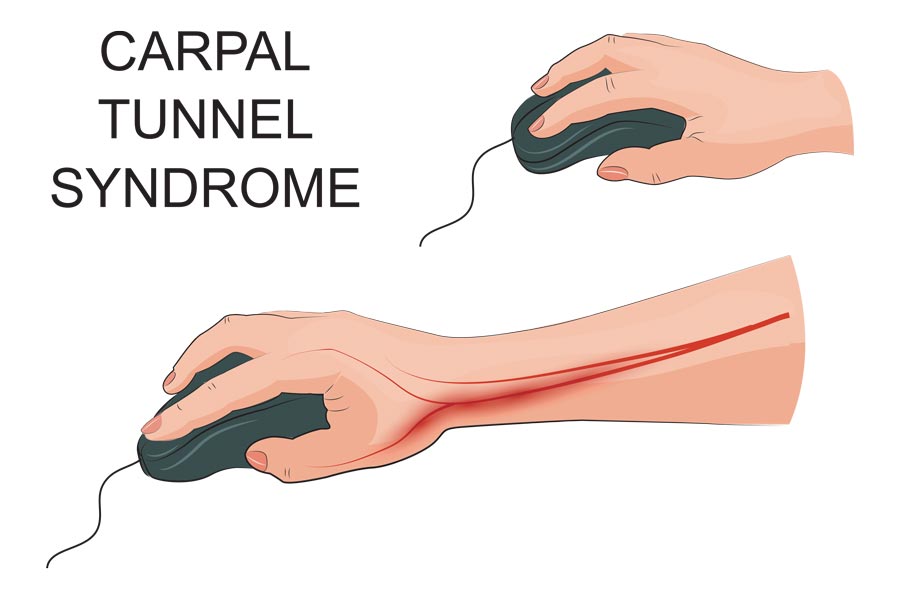
What are the symptoms of carpal tunnel syndrome?
In majority of cases, the symptoms develop gradually andmay include:
- Numbness, tingling or pain in your fingers exceptthe little finger
- Pain that may disturb your sleep, as many people sleep with their wrists curled during night
- Sensation of an electric shock in the fingers
- Decreased sensation in the fingertips
- Difficulty while doing regular activities like
- Brushing your teeth
- Holding a steering wheel, coffee mug, news paper or book
- Writing
- Using the computer keyboard
- Weakness in hands resulting in dropping objects
- Decreased grip strength leading to inability to perform regular tasks like buttoning a shirt
If left untreated it may lead to wasting away and shrinking of the muscles at the base of the thumb.
What are the causes of the carpal tunnel syndrome?
Carpal tunnel syndrome is a multi-factorial condition. The carpal tunnel is a narrow canal in the wrist made of your carpal bones and the ligaments holding them together. Through this tunnel passes your medial nerve and the tendons (tissues that connect muscles to the bones). Following are some of the factors and conditions that may contribute for narrowing of the space in the wrist leading to nerve compression.
- Swelling due to trauma or injury to the wrist
- Deformities in the wrist or hand
- Work involving repetitive movements of the hand and wrist for a prolonged period of time such as working with vibrating tools or computer keyboard and mouse.
- Fluid retention during pregnancy or menopause
- Medical conditions like
- Overactive pituitary gland
- Underactive thyroid gland
- Rheumatoid arthritis
- Kidney failure
- Diabetes
- Tumor or cyst in the canal
- Medications
How is carpal tunnel syndrome diagnosed?
Early diagnosis of the condition helps to prevent further damage to the median nerve. The diagnosis of carpal tunnel syndrome includes:
Medical history: During medical history, the patient may be asked about the activities during which the symptoms appear like during holding a news paper, phone etc and whether the pain keeps them awake at night.
Physical examination: A physical examination includes checking the wrist for the signs such as tenderness, swelling or warmth and assessing the sensation of the fingers. As many people develop pain while bending their wrist or when the nerve is pressed, the physician may perform some specific tests that may reproduce the symptoms and helps in diagnosis. The physician may also examine the hands, arms, shoulders and neck to identify whether the symptoms develop due to other conditions.
Electrodiagnostic tests: Special tests that measure the electrical activity of the muscle fibers and nerves help in determining the severity of damage to the median nerve.
X-ray: X-ray may be recommended to rule out other possible causes such as arthritis or trauma.
Ultrasound: Ultrasound helps to identify if the median nerve is abnormal in size.
What is the treatment for carpal tunnel syndrome?
The treatment depends on the severity of the condition. The first line of treatment is non-surgical interventions. Surgical treatments may be considered if the non-surgical treatments fail to provide relief and to prevent the irreversible damage to the nerve.
Non-surgical treatments
Activity modifications: The physician may recommend avoiding the activities that aggravate your symptoms. This may help in slowing down the progression of the condition.
Wrist splinting or bracing: Wearing a brace or splint at night holds your wrist straight and reduces pressure on the nerve. It is also helpful while performing your regular activities that can cause your symptoms.
Medications: Medications such as NSAIDs (non-steroidal anti-inflammatory drugs such as ibuprofen or naproxen) may help in relieving pain and inflammation.
Injections: Steroid injections such as cortisone injected into the carpal tunnel are often helpful to relieve form painful symptoms for certain period of time.
Exercises: Specific exercises such as nerve gliding exercises which allows the median nerve to move freely within the carpal tunnel may be beneficial.
Surgical treatments
The most common surgical procedure is the carpal tunnel release that involves cutting the ligament pressing the nerve. It can be done in two different methods.
Open release surgery: It is relatively a traditional procedure and involves making an incision in the wrist and then cutting the ligament.
Endoscopic surgery: This procedure involves making one incisions through which a camera attached to a tube is inserted, which aids in observing the process. A small knife is inserted into the tube helps to cut the ligament and release the pressure on the nerve.
How is the carpal tunnel syndrome prevented?
Prevention of carpal tunnel syndrome could be difficult as it can be caused due to number of factors involved in the person’s day to day life. However the following preventive measures may help to reduce your risk for the condition.
- Performing stretching exercises before and after activity
- Keeping your wrists straight while sleeping and using tools
- Avoiding frequent curling and extending your wrists
- Relaxing your grip
- Taking short and frequent breaks
- Improving your posture
- Keeping your hands warm
References:
- https://orthoinfo.aaos.org/en/diseases--conditions/carpal-tunnel-syndrome/
- https://www.mayoclinic.org/diseases-conditions/carpal-tunnel-syndrome/symptoms-causes/syc-20355603
- https://www.ninds.nih.gov/disorders/patient-caregiver-education/fact-sheets/carpal-tunnel-syndrome-fact-sheet
- https://my.clevelandclinic.org/health/diseases/4005-carpal-tunnel-syndrome/prevention
- https://medlineplus.gov/ency/article/000433.htsm