One may experience severe pain in the wrist, when it is forcefully bent or twisted, such as a sudden blow or a fall onto an outstretched hand. These incidents may cause a tear in the wrist ligament causing wrist pain. This pain may affect our day-to-day activities like cooking, typing, brushing or even tying shoes. This condition is called wrist ligament injury.
What is a Wrist ligament injury?
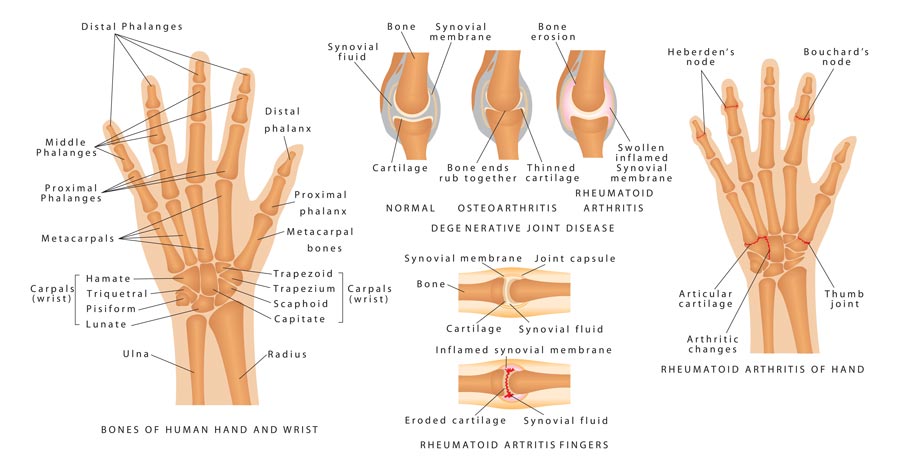
Our wrist acts as a link between the hand and forearm. The bones in the wrist are held together by tough fibrous connective tissue called ligaments. These ligaments are important in maintaining the flexibility of wrist bones. If any of these ligaments are stretched, torn or bent, it may lead to a wrist ligament injury or wrist sprain. The condition can range from mild to severe depending on the extent of damage in the ligaments and can be graded as follows:
Grade 1 (Mild): Ligaments are stretched but not torn.
Grade 2 (Moderate): Ligaments are partially torn and may involve some loss of function.
Grade 3 (Severe): Ligaments are completely torn; require medical care or even surgery.
What are the common symptoms of wrist ligament injury?
The symptoms of a wrist sprain vary depending on the severity. The common symptoms include:
- Swelling in the wrist
- Bruising (a black and blue discoloration) of the skin around the wrist
- Tenderness of wrist
- Persistent pain on wrist movement
- A “popping” feeling or tearing inside the wrist
- Warm sensation around the wrist.
Immediate medical attention is required if you experience a sprain on your wrist after any accident, as it may be fractured which may get worse when not treated at the early stage.
What causes a wrist ligament injury?
Wrist ligament injuries are often caused by a fall, where you forcefully land on outstretched hand. Though wrist ligament can happen during everyday activities or at workplace, it is common in sports that require extreme twisting movements of hand and wrist.
What are risk factors for a wrist ligament injury?
Anyone can get a wrist ligament injury. But wrist ligament injury is more among those people who are active in sports (basketball, football, volleyball, gymnastics, hockey, tennis etc.) or those who actively bend and stretch their wrists while working, like manual laborers, construction laborers, plumber, carpenters, etc.
How is wrist ligament injury diagnosed?
The initial evaluation of a wrist sprain begins with a physical examination where your physician will check the wrist joints to find areas of tenderness and swelling and the moving patterns of the wrist. The physician will also ask about your symptoms, medical history and previous hand and wrist injuries. The physical examination is followed by imaging tests to help confirm the diagnosis. X-rays, CT scan, MRI’s or arthrograms (imaging technique where a special dye is injected into the wrist joint to get clear images) are used for diagnosing ligament injuries.
What are treatment options for a wrist ligament injury?
The main aim of treating wrist injury is to reduce the associated pain and to restore normal functions of the wrist. Usually, non-surgical treatments are preferred. A doctor may recommend surgery when the injury is severe or non-surgical treatments fail to achieve the treatment goals.
The treatment of the wrist ligament injury depends on the severity or grade of the injury:
Mild (Grade 1) wrist sprains can be treated by self-care methods at home by following the RICE protocol:
- Rest: Avoid activities that trigger the pain and allow the joint to rest for at least 48 hours.
- Ice: Apply ice pack (not directly to the skin) immediately after the injury for every 20 minutes to reduce swelling.
- Compress: Wear an elastic compression bandage to reduce the swelling on the injured area.
- Elevate: Try to keep the injured area above the level of the heart to reduce swelling and drain away the excess fluids.
Your doctor also may suggest a non-steroidal anti-inflammatory drug (NSAID) to relieve pain and ease swelling.
Moderate (Grade 2) injuries need to be immobilized with a wrist splint for at least 1 week, followed by stretching exercises to regain the strength, mobility and flexibility of the wrist.
Severe (Grade 3) injuries may require surgical treatment as the ligament may be completely torn. Surgical procedure will repair the fully torn ligament and connect the ligament back to the bone. The procedure will be followed by a rehabilitation period to strengthen your wrist and restore its range of motion.
How can one prevent the chances of a wrist ligament injury?
Most wrist injuries occur due to falls and are difficult to prevent. However, some preventive measures can be taken to reduce the severity and the risk of injury. The preventive measures include
- Stay alert while walking or running on wet or slippery surfaces.
- Wear protective braces or support equipment during the sports activities, which will protect the wrist from bending too far backward if you fall.
- Practice exercise that strengthen the wrist and nearby muscles.
- Try to maintain a safe playing environment to prevent falls.
Sources
-
Wrist Sprains. https://orthoinfo.aaos.org/en/diseases--conditions/wrist-sprains. Accessed on: 17-02-2020.
-
Wrist Sprain. https://www.health.harvard.edu/a_to_z/wrist-sprain-a-to-z. Accessed on: 17-02-2020.
-
Understanding a Wrist Sprain. https://www.fairview.org/patient-education/90645. Accessed on: 17-02-2020.
-
Wrist Sprains.https://www.nationwidechildrens.org/specialties/sports-medicine/sports-medicine-articles/wrist-sprains. Accessed on: 17-02-2020.