The hip joint is the largest weight-bearing joint in the human body; it is a type of ball and socket joint. The hip joint is the junction where the pelvis connects the thigh bone (femur) to the central part of the body (trunk). This joint is extremely strong, as it bears the body weight, and amazingly flexible, allowing a wide range of movement.
Any injury or disease of the hip will adversely affect the joint's range of motion and its ability to bear weight. If the injury causes significant hip pain and symptoms do not improve with medical or non-surgical treatments, doctors may recommend surgery to repair or reconstruct the joint. One of the highly recommended surgical methods to diagnose the cause and repair hip injury is Hip Arthroscopy.
What is hip arthroscopy?
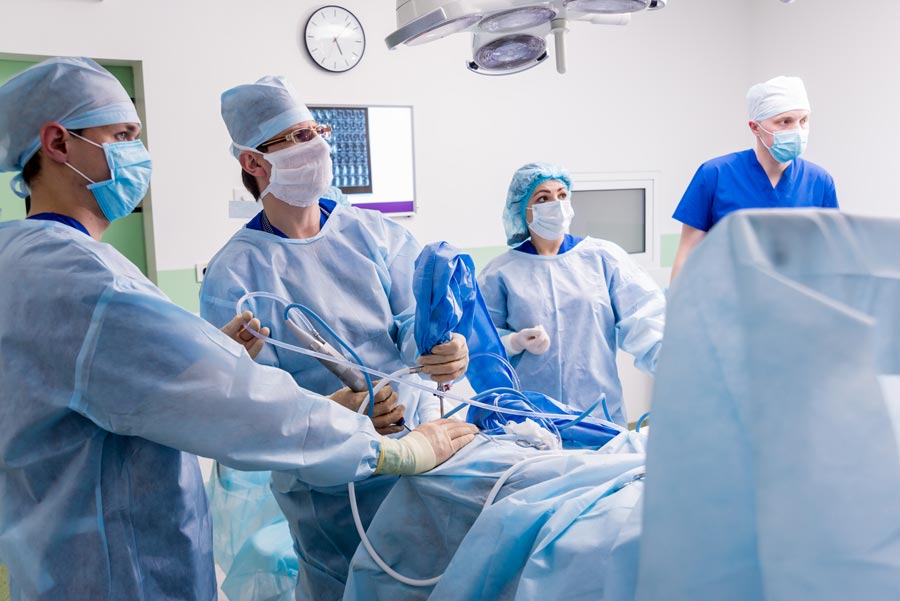
Hip arthroscopy is a minimally invasive surgical procedure performed using a thin tube mounted with a high definition camera, and specialized instruments inserted through small incisions to work inside the hip joint. This allows the surgeon to view the hip joint without making a large incision (cut) through the hip. Hip arthroscopy can be used to diagnose and treat problems with the labrum (cartilage that lines and strengthens the hip), soft tissue around the joint, repair the damage and to remove debris.
The surgeon may reshape the bones in the hip joint to fit them smoothly and repair the labrum. This can improve the hip joint’s function and relieve pain caused by the friction and impingement between the bones.
When is Hip Arthroscopy recommended?
Hip arthroscopy as a surgical treatment is recommended for hip conditions which are severe and for those patients who do not respond to non-surgical treatment. Common injuries and conditions that can be fixed with arthroscopic hip surgery are:
- Hip impingement (femoroacetabular impingement): A disorder in which a bone growth develops along the acetabulum (the socket of the hip joint) and the femur head limiting the range of motion.
- Hip labral tears: This condition occurs when the labrum (the ring of cartilage that helps hold the ball of the hip in the hip socket) gets torn or damaged.
- Synovitis: Disorder which causes the tissues that surround the hip joint to become inflamed.
- Hip joint infections: The condition where the microbes like virus, bacteria, fungi, etc. l enter the hip joint and multiply. This will cause certain infections leading to an irreversible joint damage.
- Loose bodies: These are the fragments of cartilage inside the joint which are usually caused by an injury.
What are the pre-procedure care for hip arthroscopy?
Arthroscopic hip surgery is usually conducted on an outpatient basis i.e. there is no prior hospital stay and the patient can return home on the same day the surgical procedure is performed. Few days prior to the surgery your doctor or surgeon will advise you how to prepare for the surgery. For a successful surgery, it is important to make sure that you follow the instructions given by your orthopedic surgeon.
- Evaluation and tests: A general health checkup may be needed before your surgery to identify any health issue that may interfere with the procedure.
- Medications: Your orthopedic surgeon may ask about the medications or supplements that you take. If the medications have any interaction with the surgical procedure, he may ask to stop the medicine or recommend an alternative method.
- Anesthesia: Before the surgical procedure, you will be evaluated to select the type of anesthesia. Hip arthroscopy is usually performed using general anesthesia where the patient is unconscious (sleeping) during the procedure. Regional anesthesia may make you numb in the bottom half of your body (below waist) but you remain awake. Regional anesthesia is preferred by the patients as it decreases the time between surgery and a patient’s discharge from the hospital.
How is hip arthroscopy performed?
Hip arthroscopy procedure is carried out as follows:
- Prior to the surgery, you will be given anesthesia.
- The procedure requires the use of a specialized operating table to position the patient to apply gentle traction on the hip joint. To begin the procedure your leg will be put in traction, which means that the hip will be pulled away from the socket enabling the surgeon to access the specific area in the joint to perform the surgery.
- As the traction is applied, small incisions are made on the hip to insert the arthroscope (camera) which will give images of the hip joint and help to identify the exact damage. Fluid is passed through the arthroscope into the hip joint space to get clear images and to control any bleeding.
- Once the damage is diagnosed, specialized instruments are inserted through the incisions to trim, cut, shave, stitch, or smooth the bones or cartilages on the damaged area.
- As the procedure is complete, your surgeon will withdraw the arthroscope and other instruments and will close the incisions using sutures. The incision is covered with small bandages or surgical tape strips.
What are the post-procedure care for hip arthroscopy?
After surgery, you will stay in the recovery room for 1 to 2 hours or till you gain consciousness (when general anesthesia is given). Prior to discharge you will be given a written instruction sheet, physical therapy guidelines and medical prescription.
- Most patients should be able to walk with crutches immediately after surgery with partial weight bearing.
- For management of pain after the surgery, medications are often prescribed for a short term pain relief after the surgery. Medicines for pain management include, non-steroidal anti-inflammatory drugs (NSAIDs) like ibuprofen, and local anesthetics like lidocaine etc. In certain cases aspirin is also prescribed to reduce the risk of clotting.
- You should keep the wound dressing dry. It is advised to have shower after two days. After shower, pat the incisions clean and dry. You should also change the dressing in 48 hours to prevent infections.
- You can also apply ice packs, wear compression bands and rest properly to control the pain and swelling in the area.
- Physical therapy is necessary to achieve the normal movements of the hip joints and some specific exercises as directed by the therapist will help to restore your strength and mobility of the joints.
Your recovery will depend on the type of damage that was present in your hip. Generally, it will take 3 months for your hip to fully recover from the procedure.
What are the risks and complications associated with the hip arthroscopy?
The risk and complications from hip arthroscopy are low compared to other surgical methods. However, the risk increases with age and a history of smoking. Some complications that are associated with the surgery includes:
- Bleeding
- Infection
- Injury to the surrounding the blood vessels and nerves
- Numbness
- Formation of blood clots
- Fluid build-up in the body
Outlook / prognosis
How well a person heals from a hip injury depends on its severity and how it is treated. After hip arthroscopy, you are advised to use crutches for 2 to 6 weeks. You will slowly be allowed to place weight on the hip after the first week of surgery. You will also be referred to a physical therapist and as the pain and inflammation is considerably reduced, you can continue to exercise as directed by the therapist.
Source:
- Hip Arthroscopy. https://orthoinfo.aaos.org/en/treatment/hip-arthroscopy/. Accessed on: 27-02-2020.
- Hip Arthroscopy. https://www.hss.edu/condition-list_hip-arthroscopy.asp.Accessed on: 27-02-2020.
- Hip Arthroscopy. https://orthop.washington.edu/patient-care/articles/sports/hip-arthroscopy.html.Accessed on: 27-02-2020.
- Hip Arthroscopy. https://arthrohealth.com.au/hip-arthroscopy/.Accessed on: 27-02-2020.
- Surgery for Hip Labral Tears.https://nyulangone.org/conditions/hip-labral-tears-in-adults/treatments/surgery-for-hip-labral-tears.Accessed on: 27-02-2020.