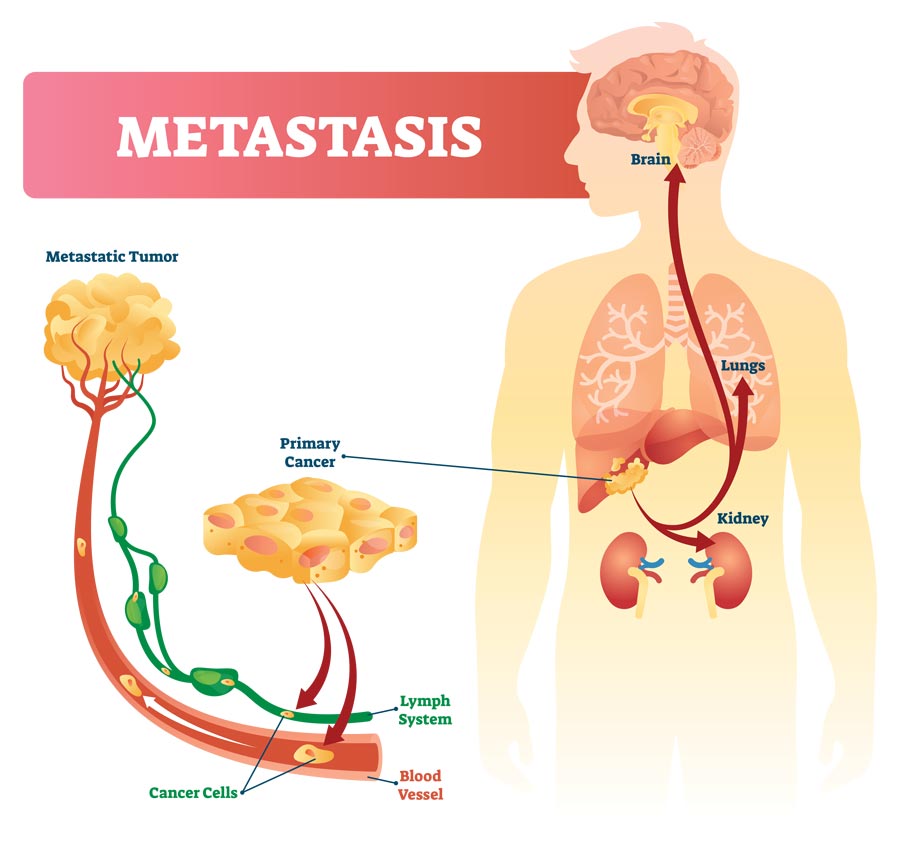
Cancer often leaves us flooded with emotions when we hear someone affected with such devastating disease. It occurs due to uncontrolled division of cells that can destroy the normal tissues and can potentially spread to other parts of the body. This process of cancer invading other parts from where it has started is known as metastasis, and when it spreads to bone, it is called as bone metastasis.
Bones are frequent sites for metastasis, once happened may become challenging to be cured. Bone metastasis may appear similar to that of cancer that has started in the bone (primary bone cancer). However, the cells in the metastasized bone tumours are not made of bone cells, but are of original tumour sites from where they have spread. Majority of bone metastases are due to prostrate or breast cancers that can metastasize to any bone, of which spine remains as the most common site. Other sites may include pelvis, upper leg bone (femur), upper arm bone (humerus), ribs and skull.
What are the types of bone metastasis?
The tumours that metastasize to bone can be categorized depending on how they affect the bones. They may:
- Create holes in the bones, making them fragile, weak and vulnerable to fractures known as osteolytic lesions.
- Lead to abnormal (calcified or mineralized) depositions of the bone that are weak and unstable known as osteosclerotic or osteoblastic lesions.
- Cause both osteolytic and osteoblastic lesions, known as mixed lesions.
What are the symptoms of bone metastases?
The tumours of the bones may cause the following symptoms:
- Pain
- Intermittent pain that may be relieved with movement
- Worsen during night
- Gradually increase and becomes constant
- Weakness
- Fragile bones that are more prone to fractures
- Nerve compression or damage (spinal cord)
- Back pain
- Numbness in the legs
- Bowel and bladder problems
- Calcium leak from the bones leading to high calcium levels in the blood (hypercalcemia) that may cause
- Nausea
- Loss of appetite
- Constipation
- Extreme thirst
- Frequent urination
- Dehydration
- Fatigue
- Confusion
- Drop in red blood cells (if bone marrow is affected ) leading to
- Tiredness
- Weakness
- Shortness of breath
What are the causes for bone metastasis?
Bones are the third most common sites for metastasis other than the lungs and liver. The reason for metastasis is still unknown. The most common cancers that may metastasize include:
- Prostate cancer
- Breast cancer
- Lung cancer
- Lymphoma
- Thyroid cancer
- Kidney cancer
- Multiple myleoma
How is bone metastasis diagnosed?
The following tests may help to identify if the cancer has metastasized to the bones or to identify the cause when you have the symptoms of bone metastasis.
X-ray: X-rays may help to identify if the bones appear less dense (osteolytic), more dense (osteoblastic), both (mixed) or fractures in the bones.
Bone scan: Minor levels of radioactive material when injected into the body is attracted to the diseased bone cells that are shown up more clearly during a bone scan involving your complete skeletal structure.
Computed tomography (CT): Detailed picture obtained through the cross-sectional images using both X-rays and computer technology helps to identify if the cancer is spread to bones.
Magnetic resonance imaging (MRI): Provides detailed images of bone and other soft tissues. Additionally, it helps to further analyze a bone mass visualized in an X-ray.
Positron emission tomography (PET): A small dose of radioactive chemical is injected into the blood that is absorbed by cancerous cells in greater extent. A PET scanner scans your body that helps to identify small tumours, which may be difficult to find with other tests.
Laboratory examinations: Measurement of substances, such as calcium or alkaline phosphatase present in higher amounts than normal during bone metastasis may help in diagnosis. However, higher levels of these substances do not always relate to bone metastasis.
Biopsy: Biopsy is a confirmative test performed when the imaging or blood tests are abnormal. During the procedure, a bone sample is obtained with the help of special biopsy needle, which is further examined under a microscope for abnormal cells.
How is bone metastasis treated?
The treatment for bone metastasis may depend on several parameters, such as the extent of spreading, prior treatment, symptoms and general health.It may follow the same regimen that is used to treat primary cancers with some additional options. The treatment helps to relieve the symptoms and to shrink or slow down the growth of bone metastases, but cannot cure the condition.
Medications: Combination of various kinds of medicines such as non-steroidal anti-inflammatory drugs (ibuprofen) or steroids are prescribed to relieve pain and inflammation.
Bisphosphonates: Medicines, such as bisphosphonates (pamidronate, zoledronic acid) helps to slow down the abnormal bone formation or destruction and reduces other related symptoms, such as bone pain, high blood calcium levels, and risk of fractures.
RANK ligand inhibitors: RANK ligand inhibitors like denosumab injections are administered when bisphosphonates are not able to provide relief. Denosumab is injected under the skin to prevent damage to the bones.
Hormone therapy: Medications to suppress the hormones are useful in the case of cancers that are sensitive to hormones, such as prostrate or breast cancers. They may either act to lower the hormone levels or block the interaction between hormones and cancer cells.
Chemotherapy: When the cancer is spread to multiple bones, chemotherapy is recommended. It involves usage of drugs (oral or intravenous) that fight against the cancerous cells throughout the body.
Intravenous radiation: It involves injecting low levels of radioactive substance (radiopharmaceuticals) into a vein, which are attracted to your bones and travel to the areas of bone metastasis and release radiation.
Radiation therapy: Strong ionizing X-rays are used to destroy cancerous cells that further helps to relieve pain and destroy tumour cells. It may also help to prevent fractures and treat spinal cord compression.
Surgery: Surgery may be recommended to prevent or treat bone fractures. It may involve stabilizing the bones with the help of metal plates, rods or screws or to repair a fractured bone. Bones that cannot be handled with metal plates can be benefited by using bone cement that is injected in the damaged or broken bone.
Tumour ablation: It involves using a probe that is inserted through your skin and is guided to the tumour site. Chemicals, electricity, heat or cold that is passed through the probe helps to destroy the tumour.
Physical therapy: A physical therapist may suggest an exercise regimen that strengthen the bones and improve mobility. He may also recommend assistive devices, such as walker or brace to avoid any pressure on the affected bones.
What is the outlook for bone metastasis?
The outlook for bone metastasis depends on the extent and location of the condition. However, it is still possible to maintain a good quality of life through some changes in your daily activities that helps in reducing pain and risk of fractures.
References
- https://www.mayoclinic.org/diseases-conditions/bone-metastasis/diagnosis-treatment/drc-20370196
- https://www.ncbi.nlm.nih.gov/pmc/articles/PMC5444408/
- https://www.oncolink.org/cancers/bone/bone-metastases/all-about-bone-metastases
- https://www.urmc.rochester.edu/encyclopedia/content.aspx?ContentTypeID=34&ContentID=25952-1
- https://www.ncbi.nlm.nih.gov/pmc/articles/PMC5444408/
- https://www.cancer.org/treatment/understanding-your-diagnosis/advanced-cancer/finding-bone-metastases.html