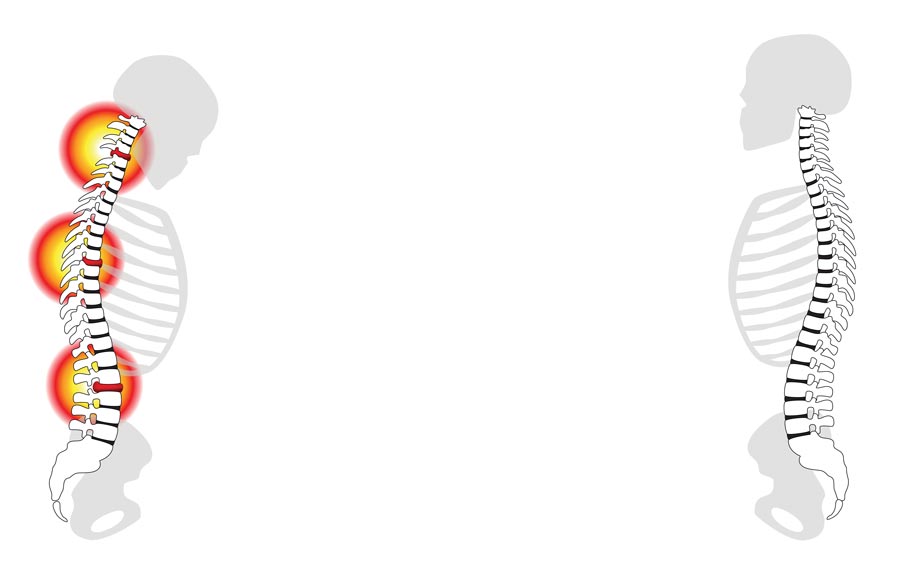
On an average your head weighs about five kilograms, when under neutral position, can be easily managed by your neck. However, as you bend your neck forward the stress on your neck increases by five times.
‘Text neck’ - this term quickly connects to you if you are one among those, hunching over a mobile for longer duration. Unlike others, it is becoming a common cause for neck pain that usually develops when your neck muscles are over strained due to poor posture. Research also suggests that more people are being affected by neck pain due to increased use of laptops or mobile phones for longer periods of time.
What are the symptoms of neck pain?
The symptoms of neck pain include:
- Pain in either side of your neck that may radiate to your shoulder or upper chest.
- Pain or weakness in your arms or hands.
- Pain that usually aggravates while holding your head in one position for longer duration, such as working on a computer or driving.
- Muscle stiffness and spasms making it difficult while you move your head.
- Numbness or tingling sensation down your arms.
- Headache
What are the causes of neck pain?
Neck pain often develop due to degeneration of the structures supporting your neck due to overuse or ageing. Some of the common factors that may cause neck pain may include:
- Muscle strain due to prolonged physical activity such as working on computers or hunching over your mobile.
- Conditions, such as osteoarthritis that causes deterioration of cartilage between bones.
- An injury or accident that causes whiplash (A sudden jerky backward and forward movement of the neck that damages soft tissues in the neck).
- Nerve compression due to herniated (slipped) disks or bone spurs.
- Poor sleeping postures.
- Stress and worry.
Other conditions that may cause neck pain include certain infections, tumors, and cervical spondylitis.
How is the neck pain diagnosed?
The diagnosis of neck pain usually includes reviewing medical history and through physical examination. The physician reviews your symptoms and the potential triggers that cause pain. The conditions during which your symptoms are aggravated are also considered. He may also check for tenderness or numbness in the affected area. In an attempt to know if there is any weakness and stiffness in your neck, the physician may ask you to move your head forward, backward and sideward.
Some other tests that may be referred to confirm the diagnosis or to find any underlying causes for the condition may include:
X-rays: X-rays are helpful in identifying the underlying cause for neck pain, such as bone degenerations, tumors, bone spurs or fractures.
Computer Tomography (CT) scan: A CT scan provides more accurate diagnosis by obtaining images of the internal structures of your neck in various directions. This helps in determining conditions like herniated disk, osteoarthritis, tumors, fractures, and infections.
Magnetic Resonance Imaging (MRI): MRI provides detailed images of your bones, soft tissues, or nerves around your neck or spinal cord. This helps in revealing joint disorders, damage in the soft tissues and nerves or other bone abnormalities that may lead to neck pain.
Electromyography: Includes testing nerve conduction to identify problems related to nerves.
Blood tests: To identify infections or inflammatory conditions that may cause the condition.
How is neck pain treated?
The primary goal of treatment is to reduce pain and to return the neck’s normal range of movement. Following are the therapies and procedures that involve in managing the condition.
Rest: Adequate rest helps in managing pain to some extent, however resting for longer periods can lead to stiffness in your neck muscles.
Hot or cold packs: Using hot or cold packs relieves pain and stiffness. Applying them for 10-15 minutes at a time is recommended.
Medications: If you find difficulty in managing the pain, your physician may recommend medications such as non-steroidal anti-inflammatory drugs to relieve your pain and inflammation.
Physical therapy: Your doctor explains you about poor postures that may cause the condition and suggests right positions that help in avoiding the symptoms.
Neck collar: Immobilizing your neck with the soft collars reduces pressure on the neck, thus it helps in relieving neck pain. However, using it for longer time is not recommended as it weaken your neck muscles.
Traction: Your physician may recommend traction, especially when the pain is related to nerve conditions. This procedure involves using weights and pulleys to gently stretch your neck and to provide pain relief.
Injections: Injections such as corticosteroids can provide quick relief from pain. They are injected directly to the affected area like your neck muscles, nerve roots or cervical spine.
Surgery: Surgery is a rare option that is usually considered in the case of spinal cord or nerve root compressions.
How can we prevent neck pain?
Knowing what causes your pain and taking simple steps towards lifestyle changes helps in preventing the condition.
Regular exercise: Exercising regularly helps in improving your muscle strength and improving good posture.
Be aware of your posture: It is important to be conscious of how you are sitting while at work, home or driving. It is also essential to choose right pillow and avoid sleeping on your stomach.
Take breaks to stretch: Take frequent breaks while you are driving or working at computer for longer periods. Moving around and stretching your neck and shoulders helps in relaxing your muscles.
Desk adjustments: It is important to adjust your monitor at the same level of your eyes. Using right chair with armrests is also essential.
Sleep position: Using right pillow that supports your neck is important. Sleeping on your back with a pillow under your thighs helps to flatten your spinal muscles that avoid future neck problems.
References
- https://www.msk.org.au/neck-pain/
- https://www.aans.org/en/Patients/Neurosurgical-Conditions-and-Treatments/Neck-Pain
- https://orthoinfo.aaos.org/en/diseases--conditions/neck-pain/
- https://www.rheumatology.org/I-Am-A/Patient-Caregiver/Diseases-Conditions/Living-Well-with-Rheumatic-Disease/Neck-Pain
- https://www.mayoclinic.org/diseases-conditions/neck-pain/symptoms-causes/syc-20375581